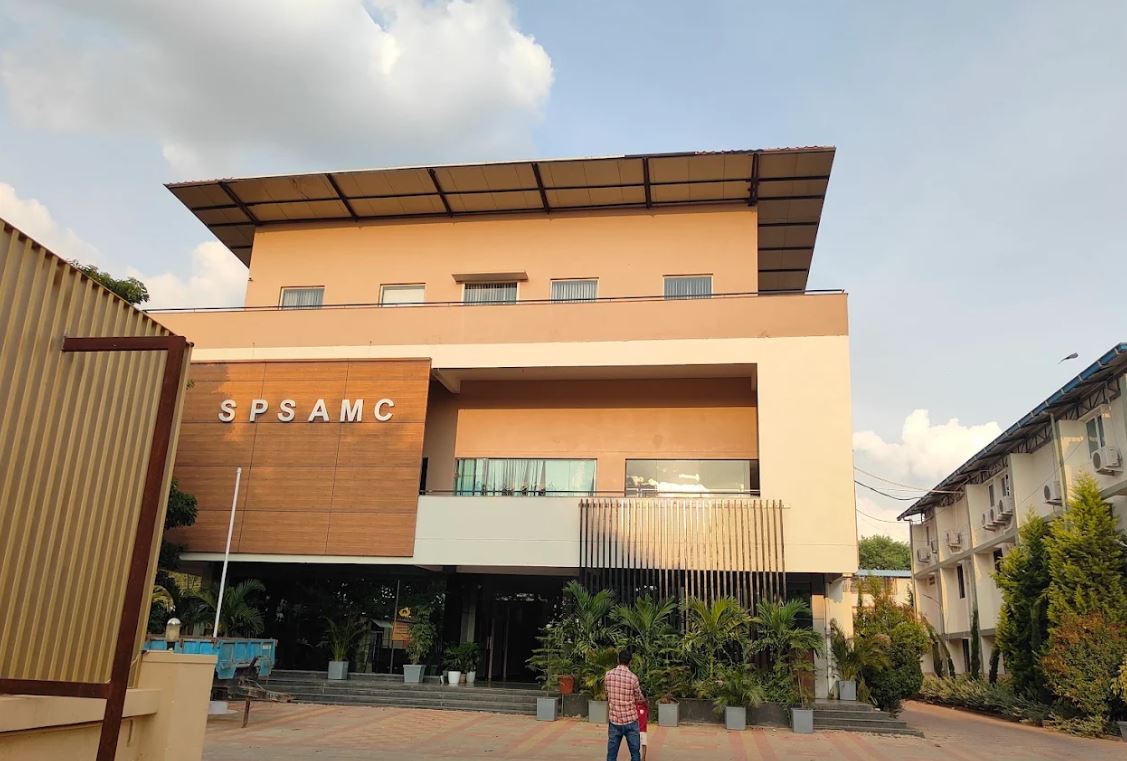
If you are hunting for a modern BAMS college that blends ancient Gurukula wisdom with modern clinical exposure, Sri Paripoorna Sanathana Ayurveda Medical College deserves a serious look. I have guided dozens of NEET aspirants through the AYUSH counselling maze, and this institution in Nelamangala keeps surfacing in conversations for one reason: it operates differently from the factory-style medical colleges you see elsewhere.
Established in 2017 under the Sri Paripoorna Sanathana Charitable Trust, the college was built on a mission that goes beyond selling degrees. The trust, founded by Prof. Dr. A.V. Srinivasan (reverentially called Pujya Swamiji), exists to serve humanity through Ayurveda, Marma Chikitsa, and the Gurukula parampara of teaching.
The campus sits at No. 91, Kaivalya Sannidhanam, Arjunabettahalli, Kasaba Hobli, Railway Gollahalli Post, Nelamangala Taluk, Bengaluru Rural – 562123. That is roughly 1.5 km from Gollahalli railway station, making it accessible without the chaos of central Bangalore.
In this guide, I will give you the same unfiltered breakdown I share with families who hire me for admission consulting: seats, approvals, facilities, fees, and the honest trade-offs you need to weigh before locking your choice.
BAMS Seats and University Approval:
Here is the data that matters most, straight from official records and counselling documents.
| Parameter | Details |
|---|---|
| BAMS Intake (2026-27) | 60 seats (sanctioned and reported across NCISM, Sansad, and counselling portals) |
| Affiliating University | Rajiv Gandhi University of Health Sciences (RGUHS), Bangalore |
| Regulatory Approval | National Commission for Indian System of Medicine (NCISM) and Ministry of AYUSH, Government of India |
| Entrance Route | NEET UG followed by Karnataka AYUSH Counselling (KEA) |
| Course Duration | 5.5 years (4.5 years academics plus 1-year compulsory internship) |
The college has held a continuation of affiliation from RGUHS for 2025-26, confirmed in a December 2025 circular, which means the university has reviewed and extended its approval.
For the 2026-27 cycle, the intake remains 60. Do not let anyone tell you otherwise. Some websites still carry outdated numbers, but the official Sansad and NCISM listings consistently show 60 UG seats.
One consultant tip: always verify the seat matrix on the KEA portal during counselling because management and NRI quota seats are priced separately from government-quota seats, and the numbers can shift slightly based on regulatory inspections.
Why Choose Sri Paripoorna Sanathana Ayurveda Medical College?
Let me answer this the way I would if you were sitting across my desk.
You choose this college if you want a Gurukula-style education where faculty mentor you beyond the syllabus. The college explicitly states that it trains students in a climate where “Guru shisya parampara is reinforced,” and teachers act as mentors for overall character development.
That is not marketing fluff. The campus is spread across 3 acres in a calm, rural setting, and the atmosphere is deliberately kept close to a traditional Gurukula rather than a corporate campus.
You also choose it if Marma Chikitsa and integrative Ayurveda excite you. The founder is a renowned Varmalogist, and the college’s curriculum weaves in Veda, Roga, and Marma Chikitsa alongside current clinical practices.
Most BAMS colleges treat Marma as an elective footnote. Here, it is part of the institutional DNA.
And you choose it if you want early clinical exposure. The attached hospital is a 60-bed facility, and students get hands-on training in Panchakarma, Kaya Chikitsa, Prasuti Tantra, and Shalya Tantra from the early years of the program.
That said, I will be honest with you: if your only metric is brand prestige in central Bangalore or a sprawling urban campus, this college may not be your first pick. It is a niche institution. But for the right student, that niche is a massive advantage.
Facilities and Infrastructure:
- Library: Over 11,000 books in a well-ventilated hall with separate seating zones for students and faculty, plus audiovisual resources.
- Lecture Halls: Five well-designed halls, each with a capacity of 60, modern AV aids, and good acoustics.
- Hospital: A 60-bed charitable hospital on campus, described as being on par with high-class hospitals, offering Panchakarma, Yoga, Physiotherapy, and specialized women’s health services.
- Hostels: Separate boys and girls hostels with 24-hour security and CCTV coverage.
- Herbal Garden: A dedicated garden used for Dravyaguna practicals and plant identification.
- Cafeteria and Transport: On-campus cafeteria with planned meals and transport connectivity to Nelamangala, Yelahanka, and Doddaballapura.
- Auditorium: Fully equipped for seminars, symposia, and guest lectures.
One notable point: the hospital has been described in some listings as NABH-accredited, which is a strong quality signal for a private Ayurveda college. Always confirm the current accreditation status directly with the college during your visit, because accreditation cycles can lapse.
Admission Process and Fees Structure:
Admission is strictly through NEET UG and the Karnataka AYUSH Counselling conducted by KEA. There is no backdoor. The college’s own admission page says applications are received through the college office after counselling allotment, and candidates must pay a skill lab and miscellaneous fee of ₹45,000 in addition to the KEA-prescribed fee.
Fee structures vary by quota. For a government-quota seat through KEA, the notified annual fee is around ₹75,000 for un-aided BAMS colleges in Karnataka. For management quota, third-party fee sheets for 2026-27 list a full-course package of ₹16.5 lakh, with hostel and mess quoted separately at ₹95,000.
NRI quota packages are priced higher and should be confirmed in writing with the college.
My advice as a consultant: do not commit to any management-quota seat without a written fee breakdown that separates tuition, hostel, mess, skill lab, university registration, and examination fees. Verbal assurances are worthless in this process.
Faculty and Clinical Training:
The college has 29 competent faculty members with rich professional experience, according to Careers360. The departments span the full BAMS spectrum: Rachana Shareera, Kriya Sharira, Samhita Siddhanta, Dravyaguna, Rasashastra, Agada Tantra, Swasthavritta, Prasuti Tantra, Kaumarabhritya, Shalya Tantra, Shalakya Tantra, and Research & Statistics.
What impresses me most is the clinical diversity students are exposed to. The hospital handles chronic conditions, women’s health (infertility, PCOD, DUB), antenatal and postnatal care through Garbhini Paricharya and Garbhasanskar, and a range of Panchakarma therapies. For a 60-seat college, that is a healthy patient flow for practical learning.
Student Life and the Gurukula Ethos
Student life here is not about flashy festivals or city nightlife. It is about quiet, focused learning. The campus is described as having a “Gurukula type of atmosphere,” and the college’s own admission page says students are taken through the basics of Vedanta and philosophies of life to “refine their thinking” and “mould their character”.
If you thrive in a disciplined, spiritually grounded environment, you will love it. If you need constant urban stimulation, you might feel restless. I tell my clients to visit the campus for a day before deciding.
Talk to current students. Sit in the library. Walk through the hospital wards. The vibe will tell you more than any brochure.
Challenges You Must Know:
No college is perfect, and a good admission consultant will never pretend otherwise. The location is rural, which means limited access to malls, coaching centers for PG entrance exams, and part-time clinical exposure outside the campus hospital. The management-quota fee is not cheap, and the total cost of attendance (including hostel, mess, and miscellaneous charges) can exceed ₹18 lakh over five and a half years.
The college is also relatively young compared to legacy Ayurveda institutions in Karnataka, which means its alumni network is still growing.
But here is the flip side: young institutions often try harder. Faculty are more accessible, mentorship is more personal, and the Gurukula model genuinely functions because the batch size is small.
Should You Apply Now In This BAMS College?
If you have a NEET score that qualifies you for Karnataka AYUSH counselling and you want a BAMS college that prioritizes clinical skill, Marma Chikitsa, and character formation over corporate scale, Sri Paripoorna Sanathana Ayurveda Medical College should be on your preference list. It is not a fallback option. It is a deliberate choice for students who want to practice Ayurveda as a craft, not just earn a degree.
My recommendation: rank it thoughtfully in your KEA choice filling, keep your documents ready, and verify every fee component in writing before you pay a single rupee.
Frequently Asked Questions (FAQs)
When was Sri Paripoorna Sanathana Ayurveda Medical College established?
The college was established in 2017 under the Sri Paripoorna Sanathana Charitable Trust, though the trust itself was founded in 2012.
How many BAMS seats are available for 2026-27?
The sanctioned intake is 60 seats for the BAMS program, confirmed by NCISM and RGUHS affiliation records.
Which university is the college affiliated with?
It is affiliated with Rajiv Gandhi University of Health Sciences (RGUHS), Bangalore, and approved by the NCISM and Ministry of AYUSH.
Is admission possible without NEET?
No. Admission to BAMS is strictly through NEET UG followed by Karnataka AYUSH Counselling. There is no management-quota admission without a valid NEET score.
What is the fee for a government-quota seat?
The KEA-notified annual fee for a government-quota BAMS seat at this college is approximately ₹75,000, plus a one-time skill lab and miscellaneous fee of ₹45,000.
Does the college have its own hospital for practical training?
Yes. It operates a 60-bed hospital on campus with Panchakarma, Kaya Chikitsa, Prasuti Tantra, and other specialized Ayurvedic services.
Are hostels available for boys and girls?
Yes. The college provides separate hostels for boys and girls with 24-hour security and CCTV monitoring.
What makes this college different from other BAMS colleges in Bangalore?
Its Gurukula-style mentorship, emphasis on Marma Chikitsa, small batch size of 60 students, and a charitable hospital-driven clinical model set it apart from larger, more corporate institutions.