While searching for ayurvedic colleges, if you keep pausing at Shri Bidarur Institute of Ayurveda, Gadag, you are not alone. Every admission cycle, parents and NEET aspirants ask me the same question: “Is this college worth locking in?” After tracking its regulatory paperwork, hospital activity, and student feedback, here is the full picture I share with my own clients.
The college was established in 2022 under the Shri Janachetana Shikshana Samiti, with the first BAMS batch admitted for the 2022-23 academic session after receiving the Letter of Permission from the National Commission for Indian System of Medicine (NCISM). You will find stray claims of 2021 or 2023 on third-party portals, but the NCISM establishment list is the document that matters for your degree, and it points to 2022.
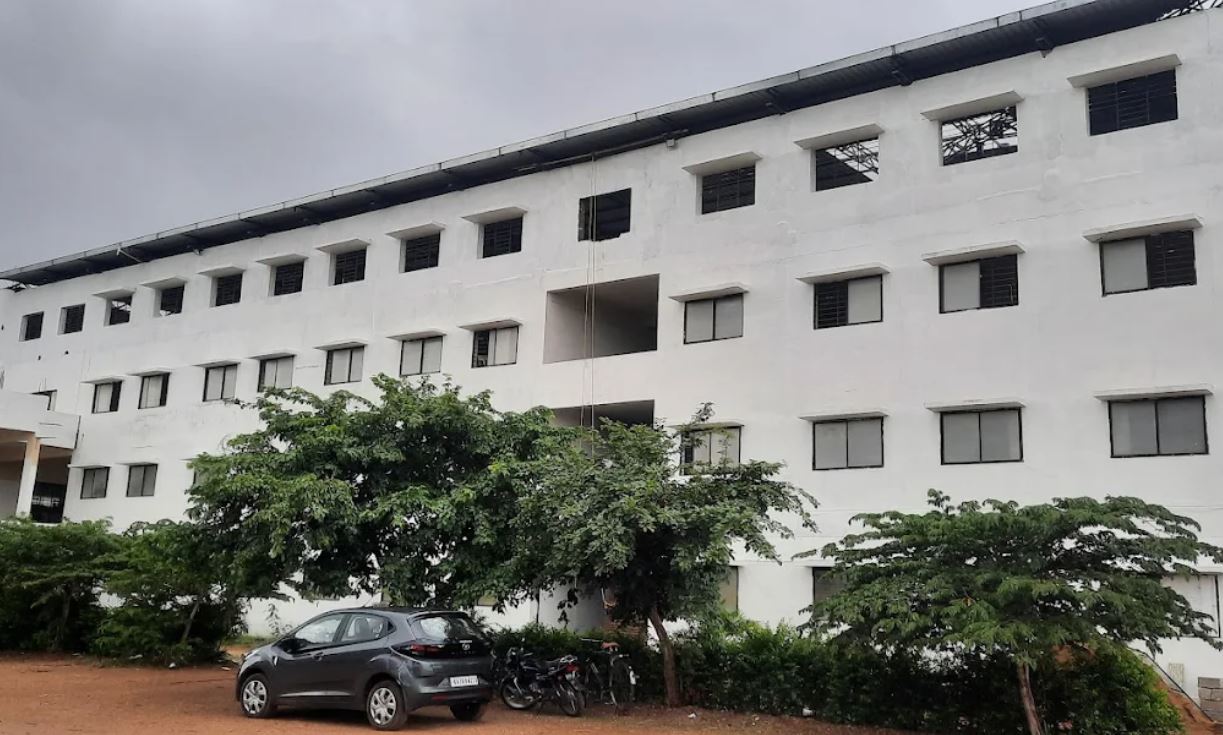
The campus sits near SMK Nagar on the Gadag-Balaganur Road, Gadag 582101, Karnataka, a location that keeps it connected to the district while staying away from the chaos of a metro.
The mission is straightforward and slightly different from the usual corporate-style brochures. The parent trust, Jana Chetana Shikshana Samiti, was built around the idea of taking Ayurveda knowledge to both rural and urban communities of Karnataka, and the college was designed as a hospital-integrated institution where clinical exposure is not postponed to the final year.
The trust’s broader vision is to deliver a world-class educational experience irrespective of creed, race, or status, which explains why the patient mix on campus looks a lot more like real Karnataka than a polished metro hospital.
Before I get into the deeper analysis, here is the snapshot every serious BAMS applicant should save.
Shri Bidarur Institute of Ayurveda Overview:
| Quick Fact | Details |
|---|---|
| Establishment Year | 2022 (first BAMS batch 2022-23) |
| Location | Near SMK Nagar, Gadag-Balaganur Road, Gadag, Karnataka 582101 |
| Affiliating University | Rajiv Gandhi University of Health Sciences (RGUHS), Karnataka |
| Regulatory Approval | NCISM and Ministry of AYUSH, Government of India |
| BAMS Intake (Current Cycle) | 60 seats |
| Teaching Hospital | 60-bedded Ayurvedic hospital with 9 OPDs |
| Campus Type | Private, self-financing, co-educational |
Now let us get into the parts that actually decide whether this college belongs on your NEET choice-filling list.
BAMS Seat Allotment and University Approval:
For the current admission cycle, Shri Bidarur Institute of Ayurveda, Gadag has an approved BAMS intake of 60 seats. This is not a rumoured number floating on a Telegram group; it is the sanctioned intake reflected in regulatory records and the college’s own admission disclosures.
The institution is affiliated with Rajiv Gandhi University of Health Sciences (RGUHS), Bangalore/Karnataka, and holds NCISM recognition along with Ministry of AYUSH approval.
I want to be blunt about why this matters. A BAMS degree is only as safe as its approval chain. If a college is not on the NCISM permitted list or lacks a valid university affiliation, your registration as a practitioner later becomes a headache you do not want. Bidarur sits inside that approval chain, and the NCISM establishment list identifies it under college ID AYU0804 with a 60-seat UG (BAMS) permission.
For the 2025-26 cycle, the permission status is an extension of that same 60-seat arrangement, which tells me the institution is operating within the regulator’s framework rather than outside it.
One practical note from my counselling desk: the 60 seats are distributed across government quota, management quota, and NRI quota, and the fee you pay depends entirely on the route through which you enter. The college is private and self-financing, so do not assume that the lowest advertised figure applies to every seat.
Always confirm the seat category before you lock a choice.
Why Choose This College?
When a candidate with a mid-range NEET score asks me whether to consider Bidarur, I do not sell it as a top-tier legacy college. I sell it as a high-exposure, hospital-integrated, emerging institution with a specific set of advantages.
- Clinical learning starts early. The college follows a hospital-integrated model where second-year, third-year, and final-year students attend rounds at the attached hospital and practise history-taking and physical examinations on real patients on campus. For a BAMS student, this is gold. Too many colleges park students in classrooms for three years and then expect them to suddenly become clinicians.
- The hospital is not a decorative attachment. The attached facility is a 60-bedded Ayurvedic hospital with 9 OPDs, including Kayachikitsa, Shalya Tantra, Shalakya Tantra, Prasooti Tantra and Stree Roga, Koumarabhritya, and Atyayika Chikitsa, and it sees nearly 150 to 200 patients every day. A busy OPD means more case variety, and more case variety means better clinical confidence.
- Panchakarma exposure is hands-on. The hospital runs a high-tech Panchakarma unit offering therapies such as Abhyanga, Sarvanga Sweda, Sirodhara, Sirovasti, and Pizichill under the supervision of specialised doctors. If you are serious about building a clinical practice in Ayurveda after graduation, this is one of the skills that pays you back immediately.
- Surgical exposure beyond the textbook. The hospital has a modern operation theatre handling Kshara Sutra for ano-rectal conditions such as piles, fistula, and fissure, along with fracture, trauma, and Agnikarma management. Shalya Tantra is often the weakest link in new Ayurveda colleges, and Bidarur has made a deliberate investment there.
- It is a value-conscious option. Compared with many private BAMS colleges in Karnataka, Bidarur sits in a more accessible fee band for management-quota aspirants, which is why it appears on the shortlists of families who want a recognised degree without stretching their finances to a breaking point.
- The campus is compact and purposeful. You are not paying for marble lobbies and palm-lined boulevards. You are paying for a library, laboratories, a dissection theatre, and a working hospital. For a student who cares about learning rather than optics, that trade-off makes sense.
The honest limitation is that this is a young institution. It does not have the decades-old alumni network of a government medical college, and its research output is still building.
If your priority is a legacy brand, look elsewhere. If your priority is early clinical exposure, regulatory safety, and an affordable private route to a BAMS degree, Bidarur deserves a serious look.
Facilities for Students:
The facilities at Shri Bidarur Institute of Ayurveda are designed around the reality of an Ayurveda curriculum, which means laboratories and hospital exposure matter more than glossy common rooms.
The library spreads across about 1,800 square feet and houses more than 8,100 volumes covering Ayurveda and modern medicine, including texts on Basic Principles, Sushrut, Dravya Gun Vigyan, Ras-Shastra, Chikitsa, Prasooti Vigyan, Bal Roga, Shalya Vigyan, Shalakya Vigyan, Sharir Rachna, Sharir Kriya, Swasth Vrit, and Agad Tantra.
A separate digital library of about 2,300 square feet provides internet-enabled access for online research and viewing.
The anatomy dissection theatre and physiology laboratory are integral parts of the campus, and students get practical demonstrations through models, LCD projectors, and slide projectors in subjects ranging from anatomy and physiology to Panchakarma and pathology. The campus also includes a health centre with first-aid facilities, departmental laboratories, sports facilities, and extracurricular events that keep the academic week from becoming a monotone.
Hostel facilities, a canteen, a college bus, and an auditorium are part of the campus ecosystem, which matters for students coming from outside Gadag.
One facility that deserves a special mention is the research orientation the institute is building. The college has established a research centre with modern technology for Ayurvedic research and has a perspective plan focused on need-based research, interdisciplinary collaboration, and even patent acquisition. For a college this young, that signals an intention to grow beyond undergraduate teaching, even if the research footprint is still modest today.
Fees:
I never let a student finalise a BAMS college without a clear fee reality check. Bidarur is a private, self-financing institution, and the fee varies by quota.
In the current cycle, the management-quota fee is reported in the ₹2.5 lakh to ₹4 lakh per year range depending on the category and the counselling route, while government-quota seats are significantly lower for eligible Karnataka candidates.
These figures are not static, and I have seen them shift between counselling rounds, so treat them as a starting point for verification rather than a final quotation.
The practical advice I give is simple: do not compare colleges on the lowest advertised fee alone. Compare them on the total cost of the five-and-a-half-year programme, including hostel, mess, books, and incidental expenses. A college that looks ₹50,000 cheaper in year one can end up costing more by the final year if the hostel and hospital charges are structured differently.
Bidarur’s compact campus keeps incidental costs relatively contained, but you still need to do the full four-year math before you commit.
Who Should Apply and Who Should Hold Back
This college fits a specific profile of student. If you are a NEET aspirant with a score that makes government-college BAMS seats out of reach, if you want a recognised private BAMS degree without a metro-city price tag, and if you learn best by seeing patients rather than memorising slides, Bidarur should be on your list.
Students from North Karnataka and neighbouring districts also benefit from the location, because the travel and hostel overheads are lower than they would be in Bangalore or Mangalore.
On the other hand, if you are looking for a college with a long-standing research reputation, a massive alumni network, or a campus culture built over decades, this is not that institution yet. It is a young, growing, clinically oriented college, and the students who thrive here are the ones who extract value from the hospital rather than waiting for the college to hand it to them.
My Opinion
Shri Bidarur Institute of Ayurveda, Gadag is not trying to be the biggest Ayurveda college in Karnataka. It is trying to be a working, recognised, hospital-integrated institution where a BAMS student can actually touch patients, practise Panchakarma, and learn Shalya Tantra within a regulated approval framework.
For the 60-seat BAMS programme under RGUHS, with NCISM and AYUSH recognition, it offers a credible private route for students who prioritise clinical exposure over brand prestige.
Verify the current seat matrix and fee category during counselling, visit the campus if you can, and then make the decision with your eyes open.
Frequently Asked Questions
Find answers to common questions about admission, BAMS seats, affiliation, fees, and facilities at Shri Bidarur Institute of Ayurveda, Gadag.
When was Shri Bidarur Institute of Ayurveda, Gadag established?
The college was established in 2022, with the first BAMS batch admitted for the 2022-23 academic session after NCISM granted the Letter of Permission. Some third-party sites mention 2021 or 2023, but the regulatory record supports 2022.
How many BAMS seats are available in the current year?
The approved BAMS intake is 60 seats for the current admission cycle. The seats are distributed across government, management, and NRI quota categories.
Which university is the college affiliated to?
The college is affiliated with Rajiv Gandhi University of Health Sciences (RGUHS), Karnataka. It is also recognised by the NCISM and the Ministry of AYUSH, Government of India.
Is the college approved by NCISM?
Yes. The institution appears on the NCISM establishment and permission lists under college ID AYU0804 with a 60-seat UG (BAMS) programme. Students should still verify the live permission status for their specific admission year.
What kind of hospital facility is attached to the college?
The attached hospital is a 60-bedded Ayurvedic hospital with 9 OPDs, a high-tech Panchakarma unit, and a modern operation theatre for Kshara Sutra and other surgical procedures. It sees approximately 150 to 200 OPD patients daily, giving students regular clinical exposure.
Does the college provide hostel facilities?
Yes. Hostel facilities, including girls’ hostel accommodation, are available on or near campus, along with a canteen, college bus, and auditorium. Students should confirm the current room availability and fee structure directly with the college.
What is the fee range for the BAMS programme?
The fee depends on the quota. Management-quota fees are reported in the ₹2.5 lakh to ₹4 lakh per year range, while government-quota seats are lower for eligible Karnataka candidates. Always verify the current fee notification before choice filling.
Is NEET required for admission to this college?
Yes. BAMS admissions in Karnataka, including at this college, are routed through NEET-based counselling conducted by the Karnataka Examinations Authority for state-quota seats. Management-quota admissions also require a valid NEET score and follow the prescribed counselling process.