If you have appeared for the NEET exam and currently scrolling through BAMS colleges in Karnataka and keep landing on the same crowded, city-based names, it is time to look beyond the usual list.
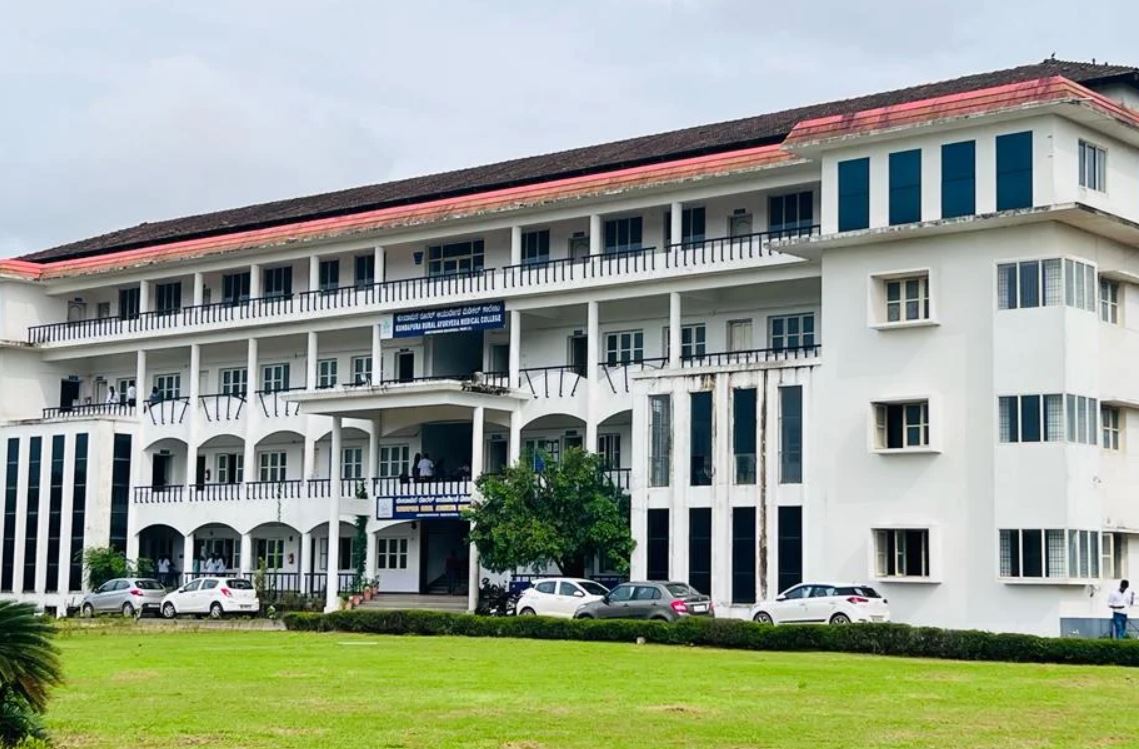
Kundapura Rural Ayurveda Medical College and Hospital (KRAMCH) sits in a quieter corner of Udupi district, but its combination of a trust-driven mission, a functioning teaching hospital, and a fee structure that does not punish you for choosing Ayurveda makes it a serious contender for NEET-qualified students.
I have worked with BAMS aspirants long enough to know that the right college is not always the most advertised one. It is the one where the seat matrix, fee slab, clinical exposure, and regulatory standing line up with your rank and your budget. This article breaks down exactly what KRAMCH offers, what it costs, and where it fits into your admission strategy.
Kundapura Rural Ayurveda Medical College Key Highlights:
Kundapura Rural Ayurveda Medical College was established in 2021 by the Amruteshwari Trust, a trust that positions community health and education ahead of commercial motives. The college was not built as a brand extension.
It was set up with a specific brief: take quality Ayurvedic education into a rural coastal belt where access to specialized medical training is limited, and produce physicians who can serve the community where they are needed most.
The campus is located at Koteshwara, Kundapura Taluk, Udupi District, Karnataka – 576222. It sits roughly 5 km from Kundapura town, on a 5.5 to 6 acre campus in a coastal setting that is calm, green, and far removed from the noise of a metro. For students who learn better in a low-distraction environment, this is a genuine advantage, not a marketing line.
BAMS Seat Intake and Regulatory Approval:
KRAMCH offers 100 BAMS seats for the current admission cycle. The seat distribution follows the standard Karnataka AYUSH counselling pattern:
- Government quota / state merit seats: allotted through KEA counselling
- Management quota seats: filled directly by the institution after NEET qualification
- NRI quota seats: a small, separately priced category
The college is affiliated with Rajiv Gandhi University of Health Sciences (RGUHS), Bangalore, and the BAMS programme is approved by the National Commission for Indian System of Medicine (NCISM), Ministry of Ayush, Government of India.
The NCISM identifier for the institution is AYU0624, and it appears in the national Ayurveda college list as a private, self-financing institution. In plain terms, the degree you earn here carries the same regulatory backing as any other NCISM-approved BAMS college in the country.
Fee Structure:
Fee transparency is where most admission articles get vague. Here is the working range based on the latest available official fee-category data for the 2025-26 cycle.
| Quota | Approximate Annual Fee | Notes |
|---|---|---|
| Government / KEA state quota | ₹75,000 per year | Lowest slab for students allotted through Karnataka state counselling |
| Management quota | ₹4,00,000 per year | Published management-quota slab for BAMS |
| NRI quota | ₹6,00,000 per year | Published NRI-category fee |
A few practical points that most aggregator pages skip:
- The total programme cost over 5.5 years depends entirely on the quota you secure. A state-quota student pays a fraction of what a management-quota student pays for the same classroom, same faculty, and same hospital.
- Hostel, examination, and miscellaneous charges sit outside the tuition slab and should be budgeted separately.
- The trust background matters here. Because the institution is managed by Amruteshwari Trust and positions itself as community-oriented, the fee floor is lower than several purely commercial private BAMS colleges in Karnataka. That does not mean the college is cheap across every quota, but it does mean the state-quota route is genuinely affordable.
BAMS College Facilities:
Ayurveda is a clinical discipline.
A college without a functioning hospital is a classroom with a degree attached. KRAMCH clears that bar with a 100-bedded attached Ayurveda hospital that runs OPD and IPD services and provides hands-on training under clinicians in Panchakarma, Kayachikitsa, Shalyatantra, and Swasthavritta.
Some sources report the hospital capacity at 130 beds, which likely reflects expansion or combined bed count, so confirm the current operational figure during counselling.
The broader infrastructure includes:
- Department-based laboratories with models, charts, and practical learning aids
- A library with 3,000 to 4,000 books, digital access, and a seating capacity of 100 to 150 students, plus national and international journals
- A herbal garden with over 400 plant species, which is not a decorative patch but a working Dravyaguna learning resource
- A pharmacy with in-house formulations for training and patient care
- Smart classrooms, an auditorium, sports facilities, a cafeteria, and IT infrastructure
- A faculty strength of around 26 members, which supports a workable student-teacher ratio for a 100-seat programme
Hostel facilities for boys and girls are available, which matters for students coming from outside Udupi district.
Why Choose Kundapura Rural Ayurveda Medical College
The strongest argument for KRAMCH is not a ranking badge. It is the combination of regulatory legitimacy and a rural clinical ecosystem. You are getting an NCISM-approved, RGUHS-affiliated BAMS degree inside a hospital that treats real patients from the surrounding community, many at subsidized rates. That kind of exposure builds clinical confidence in a way that simulated labs cannot.
The second argument is fee geometry. If your NEET rank can pull a state-quota seat, the ₹75,000 annual slab makes this one of the more accessible private Ayurveda colleges in Karnataka.
Even the management slab, while significant, sits within the range of private BAMS fees rather than at the top of it.
The third is environment. A coastal campus in Koteshwara, with a herbal garden and a patient population that depends on the hospital, gives you a learning setting that is closer to how Ayurveda is actually practised in community settings. If you want a college where the hospital is not a photo-op but a working part of your training, KRAMCH deserves a close look.
Frequently Asked Questions About Kundapura Rural Ayurveda Medical College
1. Is Kundapura Rural Ayurveda Medical College government or private?
It is a private, self-financing institution managed by Amruteshwari Trust. It is not a government college, but it participates in Karnataka state quota counselling through KEA.
2. Which university is KRAMCH affiliated with?
The college is affiliated with Rajiv Gandhi University of Health Sciences (RGUHS), Bangalore, and the BAMS programme is approved by NCISM, Ministry of Ayush.
3. How many BAMS seats are available at KRAMCH?
The sanctioned intake is 100 seats per year.
4. What is the fee for BAMS at KRAMCH?
The state-quota fee is around ₹75,000 per year. Management quota is approximately ₹4,00,000 per year, and the NRI quota is around ₹6,00,000 per year. Hostel and examination charges are extra.
5. Does KRAMCH have its own teaching hospital?
Yes. The campus has an attached Ayurveda hospital with 100 beds (reported as 130 in some sources), offering OPD, IPD, Panchakarma, and general Ayurvedic care.
6. Is NEET compulsory for admission to KRAMCH?
Yes. NEET-UG qualification is mandatory for all quota seats, including management quota. State-quota seats are allotted through KEA counselling, while management seats are filled by the institution after NEET qualification.
7. Does the college provide hostel facilities?
Yes. Hostel facilities are available for both boys and girls.
8. Is the college approved by NCISM?
Yes. KRAMCH holds NCISM permission for the BAMS programme and appears in the national NCISM college list under code AYU0624.
9. When was Kundapura Rural Ayurveda Medical College established?
The college was established in 2021 by Amruteshwari Trust.
AT last the conclusion is that, Kundapura Rural Ayurveda Medical College is not trying to be the loudest name in Karnataka Ayurveda admissions. It is trying to be a functional, regulation-compliant, community-rooted institution with a hospital that actually trains students.
For NEET-qualified candidates who want a BAMS seat where the fee slab is rational, the affiliation is solid, and the clinical environment is real rather than cosmetic, KRAMCH belongs on your counselling shortlist.
Also please Check the current seat matrix, confirm the fee slab for your quota, and visit the campus if you can. The hospital corridor will tell you more than any brochure.