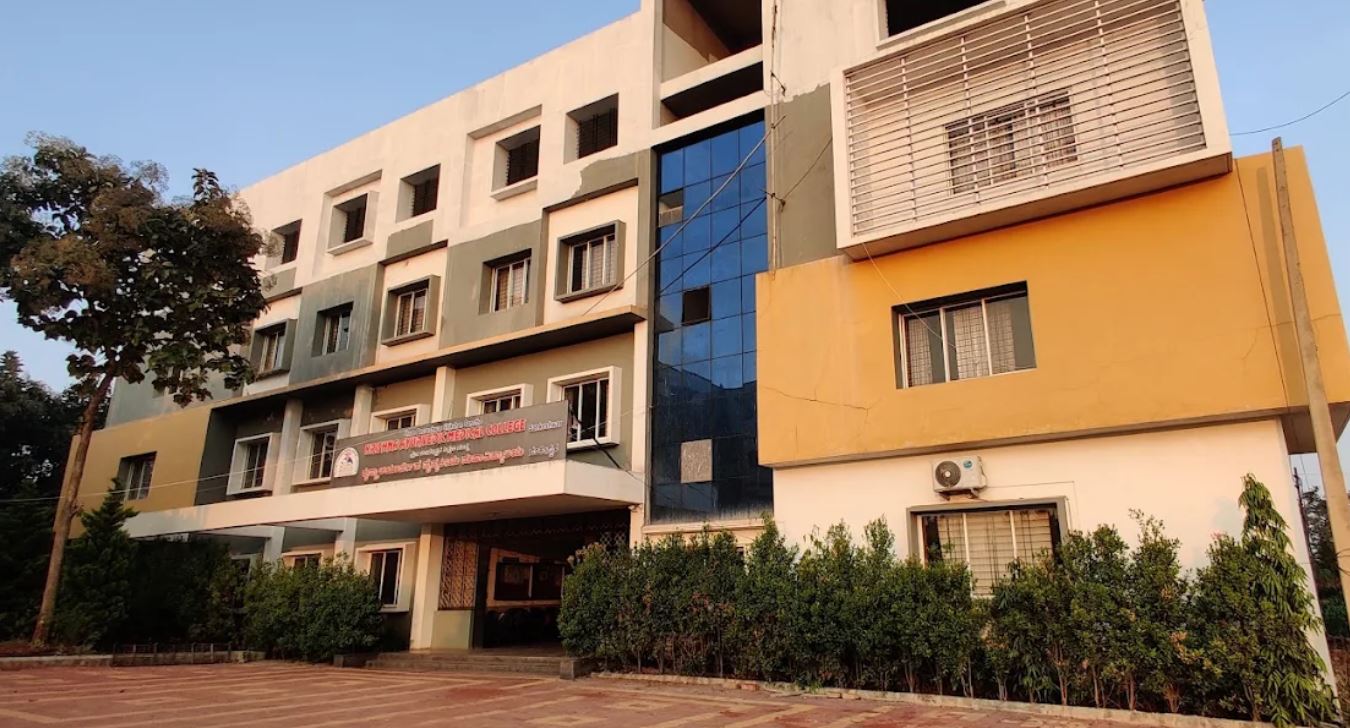
If you want to enroll into Krishna Ayurvedic Medical College, Sankeshwar for BAMS course, you are not alone. Every admission cycle, hundreds of NEET-qualified students and their parents ask me the same question: is this college worth locking in a seat, or should we keep looking?
Here is the short answer. Krishna Ayurvedic Medical College is a practical, regulation-compliant, and clinically grounded choice for students who want an Ayurveda education without the noise of a mega-city campus. But like every admission decision, the value depends on what you are optimising for: budget, clinical exposure, affiliation credibility, or long-term practice readiness.
Let me break it down the way I would in a one-on-one counselling session.
Krishna Ayurvedic Medical College Overview:
Before we go deeper, here is the snapshot every serious BAMS aspirant should see first. These are the details that matter for your admission file, your counselling preference list, and your fee planning.
| Parameter | Details |
|---|---|
| College Name | Krishna Ayurvedic Medical College & Hospital, Sankeshwar |
| Trust / Management | Shri Beereshwara Shikshana Sansthe (R) |
| Location | Behind Syrine Hospital, Old P B Road, Sankeshwar, Karnataka – 591313 |
| Establishment of Trust | 1998–99 (the trust and educational group were founded in this period) |
| BAMS Intake (Current Cycle) | 100 seats |
| Affiliating University | Rajiv Gandhi University of Health Sciences (RGUHS), Bangalore |
| Regulatory Approval | NCISM and Ministry of AYUSH, Government of India |
| Course Duration | 5.5 years (4.5 years academics + 1 year internship) |
| Entrance Requirement | NEET-UG mandatory for AIQ, State Quota, Management Quota, and NRI seats |
One clarification that matters: You will find conflicting dates online about when the college was “established.” Some third-party portals list 2016 or 2017 because that is when the BAMS programme received its formal affiliation pathway.
The trust itself, however, has been in the education space since 1998–99, and the college’s RGUHS affiliation records go back to the 2017–18 cycle. For admission purposes, the current regulatory recognition and seat matrix are what you should verify, not the founding trivia.
Where Is the College Located?
Sankeshwar is a small town in the Belagavi district of Karnataka, positioned on the old Pune–Bangalore highway corridor. The college sits behind Syrine Hospital on Old P B Road, which means it is inside a healthcare cluster rather than on an isolated plot.
For a BAMS student, this matters more than it sounds. Ayurveda is a clinical discipline. Your learning is not confined to lecture halls; it happens in the hospital OPD, the Panchakarma block, the herbal garden, and the bedside.
A campus that is physically connected to a functioning hospital ecosystem reduces the friction between classroom theory and patient contact.
The trade-off is obvious. Sankeshwar is not Bengaluru. If you are a student who thrives on metro-city exposure, corporate hospital networks, and weekend conferences, this location will feel quieter. But if your priority is focused study, lower cost of living, and a campus culture built around Ayurveda rather than urban distractions, the location is an asset, not a limitation.
BAMS Seats and University Affiliation:
The college currently has a sanctioned intake of 100 BAMS seats. This is a significant jump from the earlier 60-seat intake, and it tells you something important about the institution’s trajectory: it has moved from a small, regional Ayurveda school into a mid-sized BAMS college with the infrastructure and faculty base to support a larger cohort.
The affiliating university is RGUHS, Bangalore, which is the same affiliating body for a large number of medical and allied-health institutions across Karnataka.
For students from outside Karnataka, RGUHS affiliation carries practical weight: the degree is recognised across India, and the university’s examination and internship framework is well-established.
The college is also listed under NCISM college code AYU0482, and its AYUSH approvals are updated on a yearly basis. When you are filling out your counselling choices, this is the kind of regulatory paper trail you want to see: current NCISM recognition, active RGUHS affiliation, and a clear seat matrix for the academic year.
Facilities For BAMS Students
Every college brochure will show you a library and a seminar hall. What you should look for instead is whether the facilities are clinical, simulation-driven, and Ayurveda-specific. Here is what Krishna Ayurvedic Medical College brings to the table.
The Yogya Simulation Laboratory
This is arguably the most underrated facility on campus. The college runs a clinical skill laboratory with simulators for BLS, ALS, chest auscultation, ECG, spirometry, blood sampling, CPR, IV infusion, catheterisation, suturing, and obstetric examination.
For Ayurveda students, this matters because modern BAMS training requires you to be comfortable with emergency response, medico-legal documentation, and basic bedside procedures. A simulation lab lets you make mistakes in a controlled environment before you touch a real patient. That is not a luxury; it is a safety net for your clinical confidence.
Hospital and Clinical Infrastructure
The college hospital includes OPD and IPD facilities, an ambulance, a pharmacy, ICU support, and wards. The hospital is not a mega-hospital, but it is functional and teaching-oriented. For BAMS students, the quality of clinical exposure depends less on bed count and more on whether faculty members actively involve students in case-taking, Panchakarma planning, and follow-up.
That is where a smaller, focused hospital can actually outperform a large, crowded one.
Library, Hostels, and Campus Life
The central library has a reading hall, separate reading rooms for staff, and subscriptions to national and international journals. Separate hostels for boys and girls are available, along with a cafeteria, gym, sports facilities, auditorium, and IT infrastructure.
The campus also has a herbal garden, which is a small but meaningful feature for Ayurveda students. Learning to identify medicinal plants by leaf, bark, and smell is part of the traditional BAMS training, and a functioning herbal garden supports that.
Why Choose Krishna Ayurvedic Medical College, Sankeshwar?
Let me answer this the way I would if you were sitting across from me with a shortlist of three colleges.
You should choose this college if:
- You want a regulation-clean BAMS seat without the premium of a metro-city brand. The college is NCISM-approved, RGUHS-affiliated, and has a current 100-seat intake. You are not gambling on an unapproved programme.
- You value clinical simulation and skill-lab training. The Yogya Simulation Laboratory gives you hands-on exposure that many smaller Ayurveda colleges simply do not have.
- You are looking for a campus where Ayurveda is the main event, not a side department. The trust’s mission is explicitly to mould “competent, compassionate, and caring Ayurvedic physicians” through teaching, patient care, and research.
- You want a lower cost of living and a study-focused environment. Sankeshwar is quieter than Bangalore, and that can translate into fewer distractions during a demanding professional course.
You should think twice if:
- You are set on a large, multi-specialty teaching hospital with high footfall in every department.
- You need a metro-city campus for family relocation or spousal career reasons.
- You are targeting a specific postgraduate pathway that requires exposure to a particular research ecosystem not available here.
This is not a “one-size-fits-all” recommendation. It is a fit-based decision, and the fit is strongest for students who prioritise compliance, clinical skills, and cost discipline over brand hype.
Admission Process:
The admission pathway is straightforward, but the sequencing matters.
- Qualify NEET-UG. NEET is mandatory for All India Quota, State Government Quota, Management Quota, and NRI seats. The college’s stated qualifying marks for the 2026–27 cycle are 213 for General category and 177 for SC, ST, and OBC.
- Register for counselling. Karnataka AYUSH counselling and AACCC counselling are the two main routes. The seat matrix for the target academic year is published through the AACCC and state counselling authorities.
- Complete the college application. The application fee is ₹1,000, and the form is available on the college website.
- Submit eligibility documents. Out-of-state students need an eligibility certificate from RGUHS within the admission deadline. The college office assists with this, but you should not leave it to the last week.
- Confirm your seat and pay the prescribed fee. The fee structure follows the Government and Fee Regulatory Committee norms and is shared at the interview stage.
One consultant tip: Do not treat the “100-seat intake” as a guarantee that seats will be easy to secure. Mid-sized BAMS colleges in Karnataka can fill up quickly during the state quota rounds, especially among students who are prioritising RGUHS affiliation. Keep your documents ready before counselling opens, not after.
Fee Structure:
The fee is one of the most searched questions about this college, and the honest answer is that it depends on the quota.
- The government quota fee is regulated and typically lower.
- The management quota carries a higher fee.
- Hostel and mess charges are separate.
Third-party sources report a tuition fee in the range of ₹3.40 lakh per year for the general quota, with a total course fee that can exceed ₹18 lakh, while management quota figures are significantly higher.
I would not advise you to treat any single online number as final. Fee structures change with regulatory revisions, and the college’s official communication at the time of interview is the only figure you should budget around.
What you can do is plan for a range and keep a buffer for hostel, books, internship-related expenses, and annual fee revisions.
My Opinions:
Krishna Ayurvedic Medical College, Sankeshwar is not trying to be the biggest Ayurveda college in India. It is trying to be a reliable, regulation-compliant, clinically serious BAMS college for students who want to practise Ayurveda with competence and confidence.
If you are a NEET-qualified student with a budget-conscious approach, a willingness to study in a smaller town, and a genuine interest in Ayurveda as a clinical discipline, this college deserves a serious look. If you are chasing a metro-campus experience or a research-heavy PG pipeline, you will likely be happier elsewhere.
The best admission decision is not the one that sounds most impressive on paper. It is the one that matches your rank, budget, learning style, and long-term practice goals.
Use this guide as a starting point, verify the current seat matrix and fee notification directly with the college, and make the call with your eyes open.
FAQs: Krishna Ayurvedic Medical College, Sankeshwar
1. Is Krishna Ayurvedic Medical College, Sankeshwar approved by NCISM?
Yes. The college is approved by the National Commission for Indian System of Medicine (NCISM) and the Ministry of AYUSH, Government of India. It is listed under NCISM college code AYU0482.
2. How many BAMS seats are available at Krishna Ayurvedic Medical College?
The current sanctioned intake is 100 BAMS seats. This is an increase from the earlier 60-seat intake, reflecting the college’s expanded infrastructure and faculty base.
3. Which university is Krishna Ayurvedic Medical College affiliated to?
The college is affiliated to Rajiv Gandhi University of Health Sciences (RGUHS), Bangalore. The affiliation is active and updated on the college website.
4. Is NEET compulsory for BAMS admission at this college?
Yes. NEET-UG is mandatory for All India Quota, State Government Quota, Management Quota, and NRI seats. The college’s stated qualifying marks for the 2026–27 cycle are 213 for General category and 177 for SC, ST, and OBC.
5. What is the duration of the BAMS course at Krishna Ayurvedic Medical College?
The BAMS programme is 5.5 years, which includes 4.5 years of academic study and 1 year of compulsory internship. The medium of instruction is English.
6. Does the college have hostel facilities for boys and girls?
Yes. Separate hostels are available for boys and girls, along with a cafeteria, gym, sports facilities, library, and IT infrastructure.
7. What clinical facilities are available on campus?
The college has a teaching hospital with OPD, IPD, ambulance, pharmacy, ICU support, and wards. It also has a Yogya Simulation Laboratory with clinical skill trainers for BLS, ALS, ECG, suturing, catheterisation, and obstetric examination.
8. Is Krishna Ayurvedic Medical College a good choice for out-of-state students?
It can be, provided you are comfortable with a smaller-town campus and you complete the RGUHS eligibility certificate process on time. The college is RGUHS-affiliated and NCISM-approved, so the degree pathway is clear for students from other states.