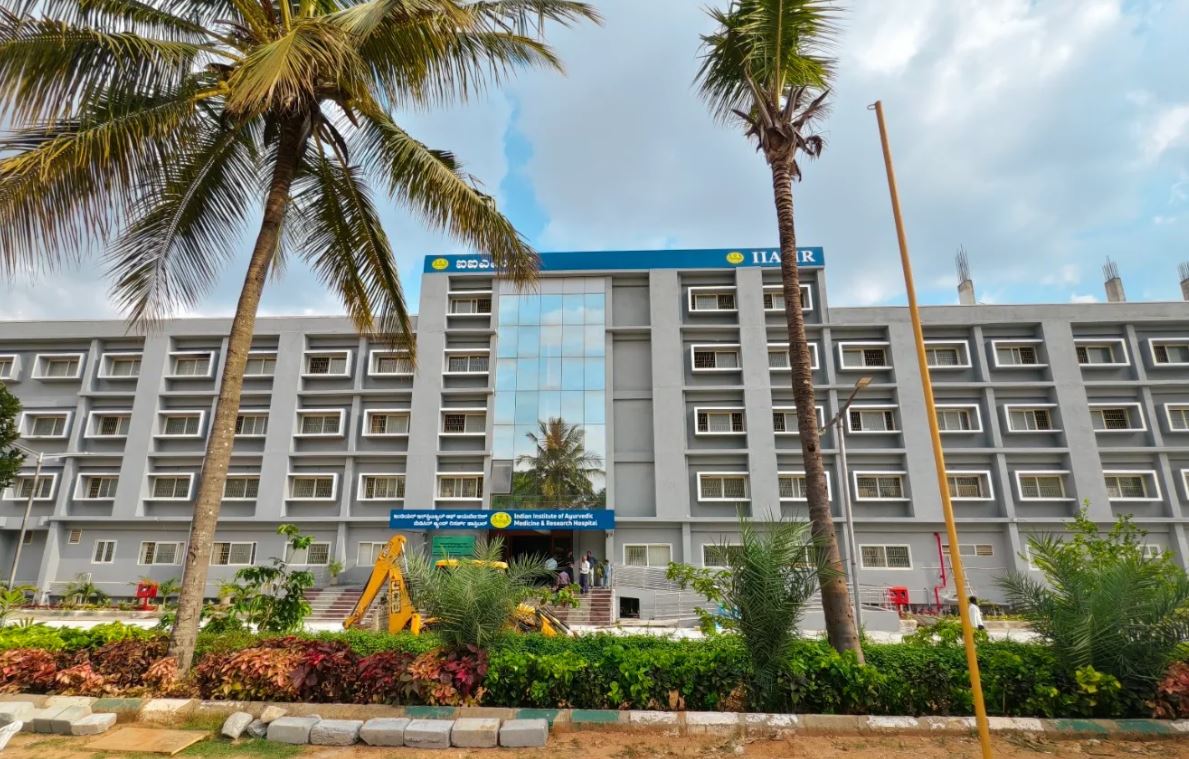
If you are a NEET aspirant scanning through dozens of Ayurveda colleges in Karnataka, you have likely paused at the Indian Institute of Ayurvedic Medicine & Research (IIAMR), Bangalore. And you should.
As someone who has guided hundreds of BAMS hopefuls through the maze of counselling, quotas, and college verification, I can tell you that IIAMR sits in an interesting spot. It is not the flashiest campus you will visit, and it does not shout from the rooftops. But it carries something far more valuable for a medical career: a long, uninterrupted legacy of Ayurvedic education in the heart of Bengaluru.
Let me give you the exact facts first, because that is what you need before you fill your choice sheet.
The Indian Institute of Ayurvedic Medicine & Research was established in 1989 as a non-profit initiative of the Sri Krishnarajendra Charitable Trust (SKRCT). Its founding mission was clear and remains relevant today: to revitalize Ayurvedic education, support research and development in Ayurvedic medicine, and produce practitioners who can bridge classical wisdom with modern clinical needs.
The college operates from its original campus at Bangalore Palace Compound, Jayamahal Road, J.C. Nagar, Bangalore – 560006, Karnataka.
A second location is often listed at Lingadeeragollahalli, Devanahalli Taluk, but for admission purposes, the Jayamahal Road campus is your primary point of contact and verification.
Now, the number you actually care about.
For the current academic cycle, the BAMS intake at IIAMR Bangalore is 60 seats . This is not a guess or a third-party estimate. The National Commission for Indian System of Medicine (NCISM) has granted the 1st Renewal of Permission with an intake capacity of 60 seats in the UG (BAMS) course for the academic session 2025-26 under section 29 of the NCISM Act, 2020.
The college is affiliated with the Rajiv Gandhi University of Health Sciences (RGUHS), Bangalore, and approved by the National Commission for Indian System of Medicine (NCISM) and the Department of AYUSH.
In simple terms: your degree will carry the RGUHS stamp, and your college is under the current regulatory framework. That is exactly what you want when you are planning a career in Ayurveda.
Indian Institute of Ayurvedic Medicine & Research (IIAMR) Overview:
| Key Detail | Information |
|---|---|
| Establishment Year | 1989 |
| Trust | Sri Krishnarajendra Charitable Trust (SKRCT) |
| Location | Bangalore Palace Compound, Jayamahal Road, Bengaluru – 560006 |
| BAMS Intake (2025-26) | 60 Seats (NCISM sanctioned) |
| Affiliated University | Rajiv Gandhi University of Health Sciences (RGUHS), Bangalore |
| Regulatory Approval | NCISM, AYUSH, Government of India |
| Teaching Hospital | 60-bedded Ayurvedic hospital on campus |
Why Should You Choose IIAMR Bangalore?
This is the question every parent asks me, and I give them a straight answer. You choose IIAMR if you want a compact, clinically grounded BAMS program in a metro city without the noise of a mega-campus. The 60-seat intake is not a drawback here; it is a feature.
A smaller batch means you are not lost in a crowd during practicals, Panchakarma demonstrations, or ward rounds. The faculty-to-student ratio is workable, and you get actual hand-holding in clinical postings.
The second reason is the hospital ecosystem. IIAMR runs a 60-bedded teaching hospital that serves as the clinical backbone for your training. The hospital is particularly noted for Panchakarma and Kayachikitsa, the two departments where Ayurveda graduates either build confidence or struggle in their early practice years.
You are not learning Panchakarma from a textbook; you are seeing patients, preparing medicines, and observing therapy protocols in an attached facility.
Third, the college has research and publication activity that is visible on its own NCISM mandate page, with faculty publishing case studies and reviews in journals like the Journal of Ayurveda & Integrated Medicine and the International Journal of Research and Analytical Reviews. For a private Ayurveda college, that is a positive signal. It means the academic culture is not entirely dormant.
And fourth, location. Jayamahal Road places you in Bengaluru, close to the city’s medical and wellness ecosystem. You are not in a remote taluk with limited exposure. For clinical electives, guest lectures, and even your own health and wellness networking during internship, Bengaluru gives you an edge that smaller-town colleges cannot match.
Facilities for BAMS Students
Let me be honest with you. No Ayurveda college in India is perfect. But IIAMR covers the essentials well, and a few facilities stand out.
The Herbal Garden
The Department of Dravyaguna maintains a herbal garden with medicinal plants used in the college pharmacy for preparing medicines. This is not a decorative patch of greenery. For a BAMS student, identifying raw drugs, understanding their habitat, and seeing the source of classical formulations is a core competency.
Having a functioning garden on campus is a practical advantage.
The Library and Digital Resources
The college library holds classical Ayurvedic texts, modern medical literature, and research journals, with 40 current subscriptions on Ayurveda, nutrition, and conventional medicine. The library is computerized and connected to the internet, and the audio-visual department stocks recordings of rare clinical cases and seminars. For a student who wants to go beyond the syllabus, this is a usable resource.
Laboratories and Pharmacy
Department-wise laboratories for anatomy, physiology, pharmacology, and Rasashastra are available, along with a college pharmacy where Ayurvedic medicines are prepared. The pharmacy is not just for show; it supplies the hospital and gives students exposure to formulation preparation.
Hostel and Campus Life
Separate hostels for boys and girls are available, with a combined capacity that comfortably covers the 60-seat intake. The campus has a canteen serving vegetarian and non-vegetarian food, a sports ground for hockey, football, basketball, volleyball, and cricket, and provisions for extracurricular activities like music, drama, and quizzes.
It is a functional campus, not a luxury resort, and that is fine. You are there to become a doctor, not to live in a hotel.
Hospital and Clinical Rotations
The 60-bed teaching hospital is the single most important facility for your BAMS degree. It provides OPD and IPD exposure, Panchakarma therapy units, and a 24-hour emergency setup with an ambulance and pharmacy. The college also has associations with larger hospitals and research organizations for advanced exposure, though you should verify the current status of these tie-ups during your counselling.
Admission Process For Current Session:
I will keep this blunt because this is where most aspirants make mistakes.
- NEET-UG is mandatory. There is no backdoor. You need a valid NEET score to be considered for the 60 seats.
- Karnataka KEA counselling is your primary route for government-quota seats. The fee range for government-quota seats is approximately ₹20,000 to ₹50,000 per year, allotted by rank.
- Management-quota seats are available for eligible candidates, with indicative fees in the range of ₹1.5 lakh to ₹3 lakh per year. If you are exploring this route, verify the current fee structure directly with the college and do not rely on hearsay.
- NRI-quota seats are also available for NRI/OCI candidates with valid documents, typically in the $5,000 to $10,000 per year range.
- Eligibility baseline: 10+2 with Physics, Chemistry, and Biology, minimum 50% aggregate (40% for reserved categories), and a valid NEET-UG score.
One more thing. IIAMR did not admit a BAMS batch for the 2024-25 session according to its own NCISM mandate page. The 2025-26 permission is a renewal, which means the college is back in the admission cycle with the full 60-seat intake.
If you are targeting 2026, confirm the current permission status with the college and NCISM before locking your choice.
Frequently Asked Questions (FAQs)
1. Is IIAMR Bangalore approved by NCISM and affiliated to RGUHS?
Yes. The college is approved by the National Commission for Indian System of Medicine (NCISM) and affiliated with the Rajiv Gandhi University of Health Sciences (RGUHS), Bangalore. The 2025-26 BAMS intake of 60 seats is sanctioned under NCISM.
2. How many BAMS seats are available at IIAMR Bangalore for the current year?
The sanctioned intake is 60 seats for the 2025-26 academic session. Older sources mentioning 31 or 45 seats reflect previous permission cycles and should not be used for current counselling.
3. What is the fee structure for BAMS at IIAMR Bangalore?
Government-quota (KEA) seats typically range from ₹20,000 to ₹50,000 per year. Management-quota seats range from ₹1.5 lakh to ₹3 lakh per year. NRI-quota seats are in the $5,000 to $10,000 per year range. Hostel and mess are charged separately.
4. Does IIAMR have its own teaching hospital?
Yes. The college operates a 60-bedded Ayurvedic teaching hospital on campus, with OPD, IPD, Panchakarma therapy units, and emergency facilities.
5. What is the duration of the BAMS course at IIAMR?
The BAMS program is 5.5 years, comprising 4.5 years of academic study and 1 year of compulsory rotating internship.
6. Is a hostel facility available for BAMS students at IIAMR?
Yes. Separate hostels for boys and girls are available, with a combined capacity that accommodates the batch size. The campus also has a canteen, sports facilities, and transport services.
7. What is the eligibility for BAMS admission at IIAMR Bangalore?
You need 10+2 with Physics, Chemistry, and Biology, a minimum of 50% aggregate (40% for reserved categories), a valid NEET-UG score, and you must be at least 17 years old by 31 December of the admission year.
8. Does IIAMR Bangalore offer MD/MS in Ayurveda?
PG courses in Ayurveda are listed in some aggregator sources, but availability and intake vary by year and NCISM permission. You must confirm the current PG seat matrix directly with the college before assuming a PG pathway at the same institution.
IIAMR Bangalore is not a college you choose because it has the biggest building or the loudest marketing. You choose it because it gives you 60 sanctioned seats, an RGUHS degree, a functioning 60-bed teaching hospital, and a Bengaluru location at a fee structure that is workable for both government-quota and management-quota aspirants.
The campus is compact, the facilities are practical, and the legacy since 1989 gives it a stability that newer Ayurveda colleges often lack.
If you are building your KEA choice list for 2026, put IIAMR in your consideration set, verify the current NCISM permission letter, visit the Jayamahal Road campus if you can, and speak to current interns about their Panchakarma and Kayachikitsa postings. That is how you make an admission decision that you will not regret four and a half years from now.