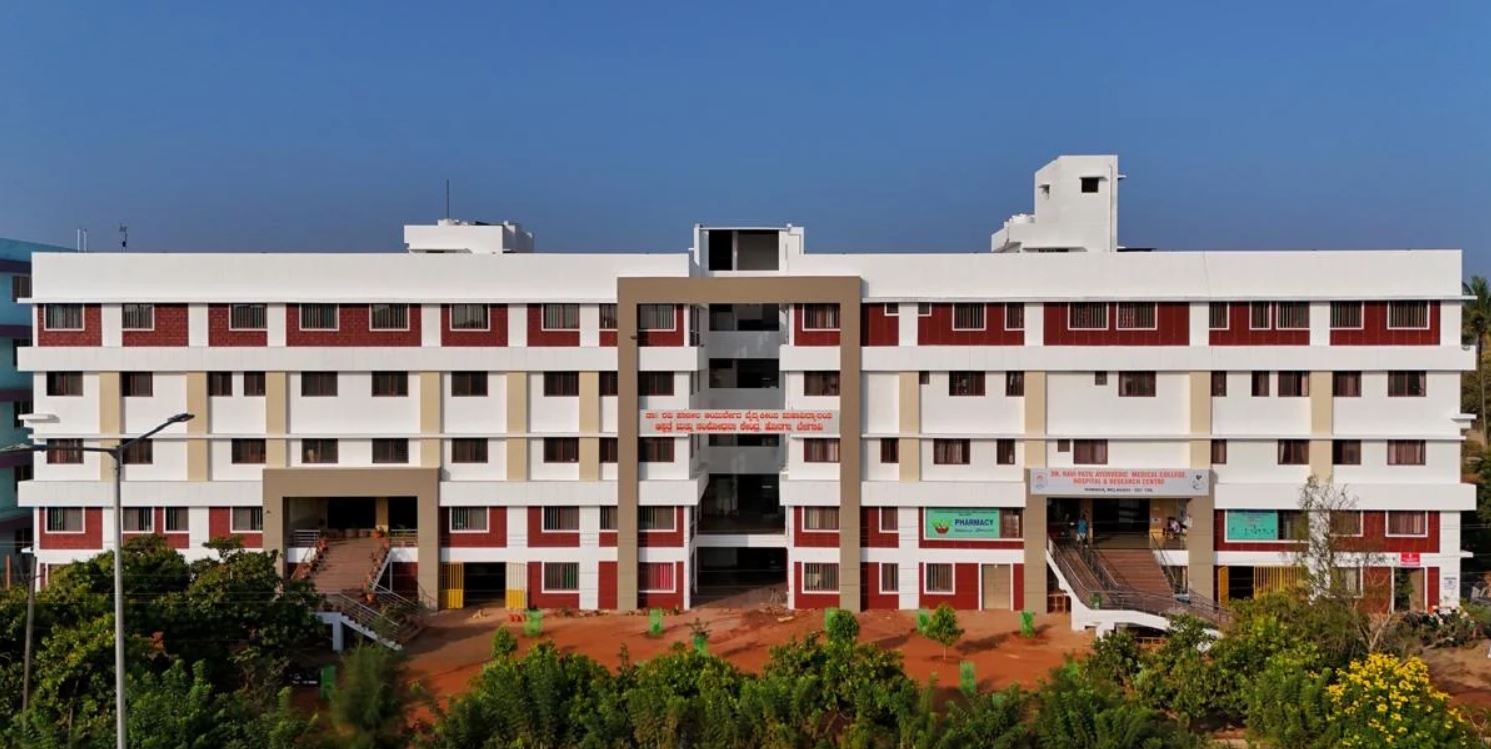
If you are a BAMS aspirant scanning through dozens of Ayurvedic colleges in Karnataka, you already know one thing. The name on the degree matters, but the ecosystem around it matters more. And that is exactly where Dr Ravi Patil Ayurvedic Medical College, Belagavi enters the conversation.
I have assisted hundreds of NEET-qualified students through Karnataka’s AYUSH counselling maze. And when a college pairs a hospital-first mindset with a clean regulatory record, I pay attention. This guide breaks down everything you need to know before you lock in a choice.
No fluff like recycled brochure language. Just the details that actually move the needle.
Dr Ravi Patil Ayurvedic Medical College Key Highlights:
Before we go deep, here is the snapshot you can save for later.
| Parameter | Details |
|---|---|
| Official Name | Dr Ravi Patil Ayurvedic Medical College, Hospital and Research Centre |
| Location | CS 144/1, NH Service Road, Honaga, Belagavi, Karnataka 591156 |
| Established | 2018 (institution began operations; trust formed earlier) |
| Affiliated University | Rajiv Gandhi University of Health Sciences (RGUHS), Bangalore |
| Regulatory Approval | National Commission for Indian System of Medicine (NCISM), Institute ID AYU0623 |
| BAMS Intake (Current Year) | 60 seats |
| Entrance Exam | NEET-UG |
| Counselling Bodies | AACCC (All India Quota) and KEA (Karnataka State Quota) |
| Teaching Hospital | 60+ bed hospital with eight specialty departments |
| Official Website | drravipatilayurveda.com |
Note: Seat distribution and fees are subject to annual NCISM and state authority notifications. Always verify the latest figures on the official portal before reporting for counselling.
Where Is the College Located and When Was It Established?
The college sits on the Honaga campus in Belagavi, Karnataka, easily accessible via the NH Service Road. Belagavi itself is a well connected education hub, linked by road, rail, and air to major cities across South and West India. For students from outside Karnataka, that connectivity is not a minor detail. It is a lifeline for clinical rotations, family visits, and internship placements.
On the establishment front, you will find conflicting dates floating around online. Some sources list 2017. Others say 2019. The most consistent institutional record points to 2018 as the year the Dr Ravi Patil Health and Education Society operationalized the college and hospital project. The broader health institutions group started in 2019, but the medical college’s foundational approval cycle traces back to 2018.
That matters because it tells you the college is young enough to have modern infrastructure but old enough to have completed at least one full NCISM permission renewal cycle.
Mission:
Here is the mission statement, stripped of jargon. The institution was established with a clear aim to “Treat and teach” . That sounds simple, but most private Ayurvedic colleges lean heavily toward one side of that equation. Some are teaching-first operations with a token hospital. Others are hospital-first businesses with a classroom attached.
Dr Ravi Patil’s stated mission is to integrate classical Ayurvedic principles with modernized techniques while serving the medical needs of Karnataka and the broader southwestern region.
The hospital superintendent’s message goes a step further. It talks about building a sense of competitive attitude and national integrity among students from diverse states and cultures. Whether that mission translates into daily classroom reality is something only current students can confirm.
But the intent, at least on paper, is aligned with what NCISM expects from a modern Ayurveda institution.
BAMS Seat Allotment and University Affiliation:
This is the section most admission consultants rush through. I will not make that mistake. The seat matrix shapes your entire counselling strategy.
The college has an approved intake of 60 BAMS seats. Those seats are distributed across three quota streams, and your NEET rank alone does not determine where you land. Your domicile status and category do.
The 60-Seat Breakdown
- All India Quota (15%): 9 seats, filled through AACCC AYUSH UG counselling at aaccc.gov.in. Open to NEET-qualified candidates from any state.
- Karnataka State Quota (25%): 15 seats, filled through KEA AYUSH counselling at kea.kar.nic.in. Restricted to Karnataka-domicile candidates.
- Management Quota (60%): 36 seats, filled directly by the college on a merit-cum-first-come basis from NEET-qualified applicants.
Why this matters: If you are an out-of-state student, your realistic route is either the 9 All India seats or the 36 management seats. If you hold a Karnataka domicile, the 15 state-quota seats give you a materially better shot at a lower effective fee. Map your strategy accordingly before choice filling.
On the affiliation side, the college is permanently affiliated with Rajiv Gandhi University of Health Sciences (RGUHS), Bangalore, and holds current NCISM yearly permission for 60 seats under Section 28 of the NCISM Act, 2020. RGUHS affiliation means the curriculum, examination patterns, and internship rotas follow a standardized, university-wide framework.
You are not studying in an isolated silo. Your degree carries the weight of one of India’s largest health sciences universities.
Facilities For BAMS Training
Let me be direct. A BAMS college without a functioning hospital is a classroom with extra steps. The clinical exposure gap is the single biggest complaint I hear from students who chose colleges on fee alone. Here is what Dr Ravi Patil brings to the table.
The Teaching Hospital
The attached hospital is a 60+ bed facility with eight specialty departments covering Kayachikitsa, Panchakarma, Shalya Tantra, Shalakya Tantra, Prasuti Tantra and Stri Roga, Kaumarabhritya, Swasthavritta, and Mano Vijnana Avum Manasa Roga.
The hospital also operates specialty OPDs for physiotherapy, Agad Tantra, fever management, and dietetics, alongside wellness programmes and community health camps.
For a student, this means real patient interaction from the early clinical years, not just observation from a distance.
Academic and Campus Infrastructure
- Library and reading room with classical Ayurvedic texts, modern medical references, and RGUHS past-examination resources.
- Skill Lab aligned with NCISM’s competency-based curriculum for hands-on procedural training.
- 15+ departmental laboratories covering anatomy dissection, Kriya Shareer, Dravyaguna, Rasashastra, Roga Nidana, and Agada Tantra.
- Herbal garden with 300+ medicinal plants, supporting Dravyaguna practical coursework and classical formulation practice.
- Separate boys’ and girls’ hostels on the Honaga campus, with an annual hostel fee of around ₹50,000 per student.
- Auditorium, sports facilities, Wi-Fi, canteen, and a meditation center for campus life beyond the syllabus.
Note: Fee figures for the BAMS course are not consistently published across all official channels. Some sources cite an annual management quota fee in the range of ₹4,00,000, while state quota figures hover significantly lower. The college and FRC-approved fee schedule should be your final reference point.
Do not rely on third-party aggregator numbers for financial planning.
Why Choose Dr Ravi Patil Ayurvedic Medical College?
This is the question every parent asks in the counselling room. Here is my consultant’s answer, without the sales pitch.
You choose this college if you want a hospital-integrated learning environment from day one. The 60-bed teaching hospital is not an afterthought. It is the operational core of the institution, and the specialty department spread gives you exposure across Panchakarma, Shalya, Shalakya, and Stri Roga during your clinical postings.
You also choose it if you value regulatory clarity. NCISM permission, RGUHS affiliation, and a transparent quota breakdown mean your degree will not face recognition headaches later. The college maintains a dedicated Skill Lab and follows the NCISM timetable, which signals that it is investing in compliance rather than cutting corners.
And finally, you choose it if you are looking at the Belagavi ecosystem. The city is affordable, well connected, and has a growing healthcare footprint. For a five-and-a-half-year journey, those quality-of-life factors matter more than glossy brochures admit.
What it is not: A legacy institution with decades of alumni depth. If your priority is a 50-year-old campus with a massive referral hospital, this college is not that.
But if you want a younger institution where the faculty-to-student ratio is manageable and the infrastructure is built for the current NCISM curriculum, it deserves a serious look.
Admission Process:
The admission pathway is entirely NEET-UG based. No institutional entrance test. No backdoor. Here is the sequence I walk my clients through.
- Qualify NEET-UG with the minimum percentile for your category. General candidates need the 50th percentile; OBC, SC, and ST candidates need the 40th percentile.
- Register for AACCC counselling (for the 9 All India Quota seats) or KEA AYUSH counselling (for the 15 Karnataka State Quota seats). Management quota candidates apply directly through the college with a valid NEET score.
- Complete online registration on the respective counselling portal using your NEET roll number.
- Pay the security deposit and wait for the state merit list or AACCC seat allotment.
- Fill and lock your choices on the portal. Remember, choice locking is irreversible on the KEA portal. Verify every preference before submission.
- Report to the college with the provisional allotment letter and complete document verification.
Documents You Will Need
- NEET-UG admit card and scorecard
- Class 10 and Class 12 mark sheets and passing certificates
- Transfer Certificate from the last attended institution
- Karnataka domicile certificate (for state quota candidates)
- Caste and income certificates (if claiming reservation or scholarship benefits)
- Aadhaar or government photo ID
- Eight passport-size photographs
- PwD certificate (if applicable)
My advice: Start assembling this folder the week your NEET result drops. Document gaps are the number one reason students lose allotted seats during reporting.
FAQs:
It is a private, self-financing institution managed by the Dr Ravi Patil Health and Education Society. It is not a government college, but it is regulated by NCISM and affiliated with RGUHS, which means it follows the same academic and clinical standards as other approved BAMS colleges in Karnataka.
The sanctioned intake is 60 seats. These are split into 9 All India Quota seats, 15 Karnataka State Quota seats, and 36 Management Quota seats.
The college is affiliated with Rajiv Gandhi University of Health Sciences (RGUHS), Bangalore. The BAMS degree is awarded by RGUHS, and the curriculum follows the university’s prescribed syllabus and examination pattern.
Yes. Every seat, including management quota seats, requires a valid NEET-UG qualification. There is no separate institutional entrance exam or direct admission pathway without a NEET score.
Fees vary by quota. Indicative figures place the management quota annual fee in the range of ₹4,00,000, while state quota fees are substantially lower. Hostel fees are approximately ₹50,000 per year. Always confirm the current FRC-approved fee schedule directly with the college before making a payment.
Yes. The attached hospital has 60+ beds and eight specialty departments, providing OPD and IPD services across Kayachikitsa, Panchakarma, Shalya Tantra, Shalakya Tantra, Prasuti Tantra, and other core Ayurvedic specialties.
Yes. The campus has separate hostel facilities for male and female students, with an annual fee of around ₹50,000 per student. The hostels are located on the Honaga campus.
The BAMS program includes a one-year compulsory rotating internship after the four-and-a-half-year academic phase. Interns rotate through Kayachikitsa, Shalya, Shalakya, Prasuti and Stri Roga, Balroga, and Panchakarma departments in specified durations, following RGUHS and NCISM norms.
Currently selecting a ayurvedic college is not about finding the most famous name on a list. It is about finding the institution where the hospital, the faculty, the regulatory standing, and your own career goals intersect.
Dr Ravi Patil Ayurvedic Medical College, Belagavi sits in a space that many newer private colleges struggle to occupy. It has the NCISM permissions, the RGUHS affiliation, and the clinical infrastructure to deliver a legitimate BAMS training experience.
If you are a NEET-qualified student weighing your Karnataka options, put this college on your shortlist. Then verify everything. Call the college. Check the NCISM portal. Cross-reference the fee schedule. That is what a smart admission decision looks like.
And that is exactly the kind of decision that sets up the next five and a half years of your career on solid ground.