If you are a medical aspirant who is scanning Karnataka’s Ayurveda landscape, you have likely noticed a new name gaining traction: Cauvery Ayurvedic Medical College and Hospital in Mysore. As an admission consultant who has spent over a decade mapping BAMS colleges across South India, I get asked one question repeatedly: Is this college worth your time and your rank? The short answer is yes, provided you understand what it offers and, just as importantly, what it does not.
Let me walk you through the realities of this institution, from its founding mission to its seat matrix, so you can make a decision rooted in facts, not brochure hype.
Cauvery Ayurvedic Medical College Overview
| Parameter | Details |
|---|---|
| Establishment Year (College) | 2023 |
| Parent Trust Establishment | 2001 (Dr. Chandrashekar Foundation) |
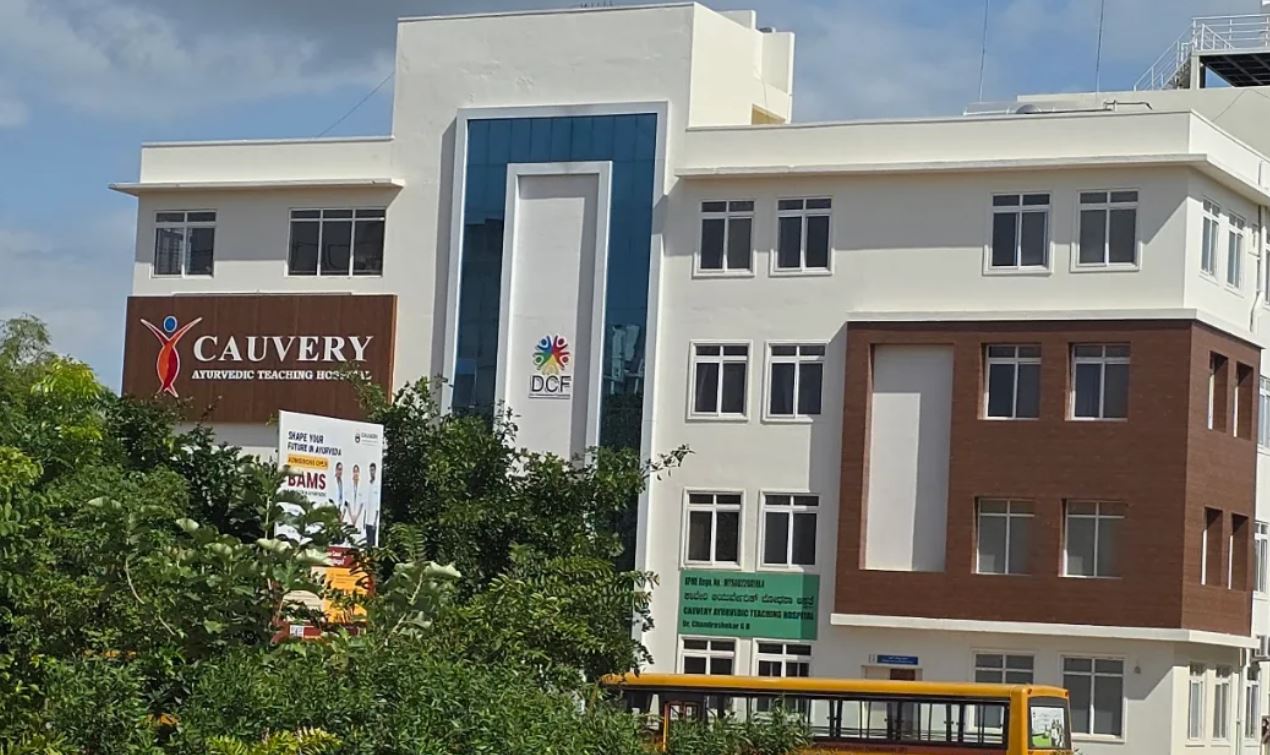
| Location | KBL Layout, near Devegowda Circle, Mysuru, Karnataka |
| Affiliating University | Rajiv Gandhi University of Health Sciences (RGUHS), Bengaluru |
| Approving Authority | NCISM, New Delhi (Ministry of AYUSH) |
| BAMS Intake (2026-27) | 60 seats |
| Teaching Hospital Beds | 60 |
| Admission Entrance | NEET-UG (AACCC for All India Quota, KEA for State Quota) |
| Program Duration | 4.5 years + 1 year compulsory internship |
The Foundation: Established, Mission, and Location
The college was established in 2023 under the Cauvery Group of Institutions, a unit of the Dr. Chandrashekar Foundation, a charitable trust that has been active in education and healthcare since 2001. This distinction matters. The trust’s long-standing presence in Mysore’s social infrastructure gave the college a running start, particularly because its teaching hospital was already operational by 2019.
You are not enrolling in a college that is still pouring concrete; you are entering a campus with an established clinical ecosystem.
The institution’s mission is stated clearly: “Dedicated exclusively to educate students for the diverse opportunities offered by careers in Ayurveda healthcare.” Its vision is to prepare excellent healthcare providers and leaders who can transform lives and communities through innovative education and healthcare. The values they publicly commit to are unity and integrity, academic excellence, innovativeness, and compassion.
Whether those values translate into daily campus life is something you will have to verify during your visit, but the stated intent is aligned with what a serious BAMS aspirant should look for.
Location is one of the college’s quiet advantages. The campus sits at 131/2D, 2E, 2F, KBL Layout, near Devegowda Circle, Mysuru, Karnataka. It is 6.5 km from the main bus stand, 8 km from the railway station, and 14 km from Mysuru Airport. Mysore is a tier-two city with a manageable pace of life, lower living costs than Bengaluru, and a climate that does not drain you during long clinical postings.
For parents concerned about safety and connectivity, the location is a practical positive.
BAMS Seat Allotment and University Affiliation:
Here is the number that matters most for your rank: the college has a sanctioned intake of 60 BAMS seats for the 2026-27 academic session, a figure confirmed in the National Commission for Indian System of Medicine (NCISM) list of permitted Ayurveda colleges.
The program duration is 4.5 years of classroom and clinical training followed by a one-year compulsory rotating internship.
The college is affiliated with Rajiv Gandhi University of Health Sciences (RGUHS), Bengaluru, and approved by the National Commission for Indian System of Medicine (NCISM), New Delhi, under the Ministry of AYUSH. RGUHS is a well-recognized state health university, which means your degree will carry weight across India and will not be a red flag during postgraduate counseling or licensure. T
he NCISM approval is not a one-time stamp; it is reviewed periodically, and the current listing confirms the college is in good standing for the current academic year.
Admissions are routed through the NEET-UG examination. The All India Quota seats are handled by the AACCC, while state quota and private management seats are managed by the Karnataka Examinations Authority (KEA). As a consultant, I always tell students to check the KEA information bulletin for the exact seat-sharing breakdown because the management-to-state ratio can shift year to year.
Do not rely on hearsay from a senior who joined three years ago.
Facilities:
The college’s infrastructure is designed to support a competency-based BAMS curriculum. The official facility disclosures and hospital reports give a reasonably clear picture.
- Teaching Hospital: A 60-bedded Ayurvedic hospital serves as the clinical training ground. It includes an Outpatient Department (OPD) in all branches, an Inpatient Department (IPD), operation theatre, pharmacy, pathology laboratory, ICU unit, and a dedicated Panchakarma therapy section operating 24 hours. The hospital offers Ayurvedic physiotherapy, ENT, surgical obstetrics and gynaecology, paediatrics, and ophthalmology, alongside a well-equipped pathology lab and physiotherapy departments. For a BAMS student, this means exposure to both classical Ayurvedic therapies and basic contemporary diagnostic services under one roof.
- Academic Infrastructure: The college has advanced-equipped laboratories, museums, a herbal garden, AI-enabled smart classrooms, and a full-fledged library with digital access and Wi-Fi. The library system reportedly holds over 30,000 books, journals, and newspapers, with both an e-library and a traditional library, individual and group study spaces, and extended exam-period support.
- Hostel and Campus Life: Hostels are available for boys and girls with four students per room, daily housekeeping, 24/7 reception, CCTV surveillance in common areas, and round-the-clock power backup. A modern cafeteria provides meals and snacks, and transportation is arranged between the hostel and clinical areas.
- Student Support: The management provides medical support for students and staff at the parent Cauvery Heart and Multi-Specialty Hospital and Medcure Diagnostic and Polyclinic at nominal charges. Scholarships are available for meritorious students.
What you will not find in the official brochures is a transparent, independently audited placement record. Ayurveda graduates typically enter clinical practice, pursue postgraduate studies, or join wellness and panchakarma centers. If a college promises “100% placement,” treat that claim with the skepticism it deserves.
Ask specific questions about internship stipends, patient footfall in the hospital OPD, and the number of faculty members with postgraduate qualifications.
Why Choose Cauvery Ayurvedic Medical College, Mysore?
Let me be direct, because that is what you pay a consultant for. You should consider this college if three conditions align with your profile.
First, you want a campus where the hospital is not an afterthought. The 60-bed teaching hospital has been running since 2019, four years before the college opened its doors. That head start means the clinical departments, Panchakarma unit, and diagnostic services were already functional when the first BAMS batch arrived.
In Ayurveda education, patient exposure is everything, and a hospital that predates the college is a stronger foundation than a college that is still building its patient base.
Second, you value a location that supports focused study without the chaos of a metro. Mysore offers a cost of living that is significantly lower than Bengaluru, and the campus is well-connected to transport hubs. For students from other states, this reduces the culture shock and the monthly burn rate.
Third, you are comfortable with a young institution that is still building its reputation. The college is not yet a decade old. It does not have the alumni network or the research output of an established government Ayurveda college. If you need a legacy brand on your degree, this is not it.
But if you are looking for a NCISM-approved, RGUHS-affiliated program with a functioning hospital and modern classrooms, the fundamentals are in place.
My advice as a consultant: Do not choose this college solely on fee structure or seat availability. Visit the campus. Walk through the hospital wards. Ask the interns about their daily duties. Speak to second-year students without a faculty member present. A 30-minute unstructured conversation will teach you more than any prospectus.
Fee Structure:
Fee transparency is where most BAMS aspirants get blindsided. The college’s official disclosures are thin, but cross-referencing admission portals and fee-tracking sites gives a working picture for the 2026-27 session. The figures below are annual tuition fees and are indicative, not final.
The Karnataka Fee Regulatory Committee revises these figures periodically, and the college’s own management quota fee can vary based on the seat-sharing agreement approved for the year.
| Quota | Indicative Annual Tuition Fee | Who Allots the Seat |
|---|---|---|
| Government Quota (G) | ₹75,000 | KEA |
| All India Quota (OPN) | As per AACCC norms | AACCC |
| Management Quota (OTH) | ₹4,00,000 | KEA |
| NRI Quota (N) | ₹6,00,000 | KEA |
Read the table carefully. The government quota figure is the most affordable route, but it is also the most competitive and is tied to your NEET rank and category. The management and NRI figures are what most private-college aspirants end up paying.
What the table does not include is the cost of hostel accommodation, mess, books, uniforms, and the compulsory internship year. Budget an additional ₹1,00,000 to ₹1,50,000 per year for living expenses if you are an outstation student.
Never pay any amount before you have a written allotment letter from KEA and a stamped fee receipt. Cash payments without documentation are a red flag in any counseling process.
Admission Process:
The college does not admit students directly. Every seat, including management and NRI quota seats, is routed through Karnataka’s centralized counseling system. Here is the sequence you must follow, drawn from the college’s official “How to Apply” page and KEA’s counseling framework.
Step 1: Qualify NEET-UG. This is non-negotiable. You must appear for the National Eligibility cum Entrance Test and secure a qualifying score. Without a valid NEET-UG rank, no quota is accessible.
Step 2: Register on the KEA portal. Once NEET results are declared, watch for KEA’s counseling notification. Register on the KEA website with your NEET details and pay the counseling registration fee.
Step 3: Select the college and quota. During choice filling, search for Cauvery Ayurvedic Medical College and Hospital, Mysore. You will be asked to choose among four seat options: Government Quota (G), All India Quota (OPN), Management Quota (OTH), and NRI Quota (N). Select the one that matches your rank and budget.
Step 4: Attend document verification. Based on your rank and category, KEA will schedule document verification at its Bengaluru office in Malleshwaram. Carry originals and photocopies of your 10th and 12th marks cards, NEET scorecard, transfer certificate, migration certificate (for out-of-state students), category certificate if applicable, Aadhaar, PAN, passport photos, and blood group certificate.
Step 5: Pay the fee at KEA and download the allotment copy. Once a seat is allotted, confirm it and pay the prescribed fee through KEA. Do not pay the college directly at this stage. Download the admission copy from the KEA portal. This document is your proof of allotment.
Step 6: Report to the college within the deadline. Carry the KEA fee receipt, allotment copy, and all original documents to the college campus. Complete the institutional admission formalities, submit the documents, and collect your admission confirmation. Missing the reporting deadline can result in seat cancellation, so treat the date as immovable.
One consultant’s warning: The management and NRI quota seats are also processed through KEA, not through the college office. If anyone approaches you claiming they can “block” a management seat for an advance payment outside KEA, walk away. The only legitimate route is the centralized counseling system.
Important FAQs for BAMS Aspirants
Useful answers to common questions about Cauvery Ayurvedic Medical College, including BAMS admission, fees, seats, hospital facilities, and student support.
Is Cauvery Ayurvedic Medical College government or private?
It is a private self-financing AYUSH college affiliated with RGUHS and approved by NCISM. It is not a government institution, which means the fee structure is set by the management and varies by quota (government, private, NRI).
How many BAMS seats are available for the 2026-27 session?
The sanctioned intake is 60 seats for the BAMS undergraduate program. Seat-sharing between state quota, All India quota, and management quota is determined by KEA and AACCC counseling rules for the year.
What is the admission process for BAMS at this college?
You must qualify in NEET-UG. All India Quota seats are allotted through AACCC counseling, while Karnataka state quota and private seats are allotted through KEA counseling. Management and NRI quota seats are also routed through KEA’s centralized process.
Does the college have its own hospital for clinical training?
Yes. The attached 60-bedded Ayurvedic hospital has been operational since 2019 and includes OPD, IPD, operation theatre, Panchakarma therapy, pharmacy, laboratory, and ICU facilities. Students receive clinical exposure from the first professional year onward, with intensity increasing in later phases.
Is a hostel facility available for outstation students?
Yes. Separate hostels for boys and girls are available with four-person rooms, daily housekeeping, 24/7 reception, CCTV surveillance, power backup, and transport to clinical areas. You should confirm the current hostel fee and room availability directly with the college, as these details change annually.
What is the fee structure for BAMS at Cauvery Ayurvedic Medical College?
Fee structures differ by quota. Publicly available data from admission portals indicates management quota fees in the range of ₹4,00,000 per year, NRI quota around ₹6,00,000 per year, and government quota seats significantly lower. These figures are indicative and must be verified with the college or KEA for the 2026-27 session, as fees are subject to revision.
How does the college support students academically and medically?
The campus has smart classrooms, digital and traditional library access, a herbal garden, and well-equipped laboratories. For medical support, students and staff can access the parent Cauvery Heart and Multi-Specialty Hospital and Medcure Diagnostic and Polyclinic at nominal charges. Merit scholarships are also available.
What should I check before finalizing admission?
Verify the current NCISM permission letter for the 2026-27 session, confirm the KEA seat matrix for the college, ask for a written fee breakdown across all years, and speak to current students about faculty retention and hospital patient flow. A college’s official website will always present its best face; your due diligence is the filter that separates marketing from reality.
Cauvery Ayurvedic Medical College, Mysore, is a new-generation private Ayurveda institution with a functioning hospital, a clean affiliation with RGUHS, and a location that works for students who want a focused, affordable city. It is not a shortcut to a government college experience, and it will not impress anyone who only respects legacy names.
But for a NEET aspirant with a rank that makes private AYUSH counseling viable, it deserves a serious look. Use the tables, ask the hard questions, and visit before you commit.
That is how you choose a medical college, not by the glossiest brochure, but by the evidence you gather yourself.