
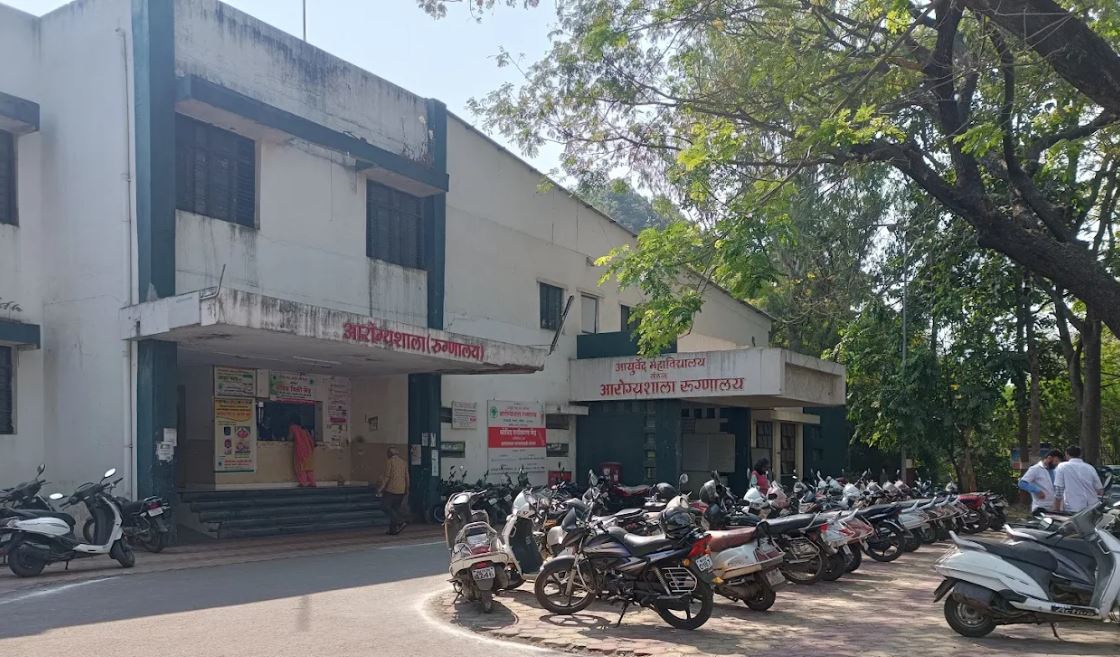
If you are hunting for a government-aided Ayurveda college in Maharashtra with a legacy that predates independence, a 150-bed teaching hospital, and a transparent 75-seat BAMS intake, Ayurved Mahavidyalaya Nashik deserves your serious attention.
In this comprehensive guide, I break down the establishment story, the current seat matrix, the MUHS affiliation, campus facilities, and the exact reasons an admission consultant would shortlist this college for you. Disclosure: This is an independent analysis based on official NCISM records, the college website, and counselling data.
Use it to ask better questions, not as a substitute for the official prospectus.
Ayurved Mahavidyalaya: Establishment, Mission, and Location
Ayurved Mahavidyalaya Nashik, formally known as Ayurved Seva Sangh’s Ayurved Mahavidyalaya, was established in 1954 at Ganeshwadi, Panchavati, Nashik – 422003, Maharashtra . The parent society was founded in Ahmednagar in 1924 and moved to Nashik in 1945, which means the institutional DNA here is nearly a century old.
| College Highlight | Details |
|---|---|
| Official Name | Ayurved Seva Sangh’s Ayurved Mahavidyalaya, Nashik |
| Established | 1954 |
| Parent Society | Ayurved Seva Sangh, founded in 1924 and moved to Nashik in 1945 |
| Location | Ganeshwadi, Panchavati, Nashik, Maharashtra 422003, on the bank of the Godavari River |
| College Type | Private, grant-in-aid Ayurveda college |
| Affiliating University | Maharashtra University of Health Sciences (MUHS), Nashik |
| Regulatory Recognition | National Commission for Indian System of Medicine (NCISM), Ministry of AYUSH |
| MUHS College Code | 123101 |
| BAMS Intake 2025-26 | 75 seats including EWS, with 60 general seats and 15 EWS seats |
| Teaching Hospital | Arogyashala Rugnalaya with 150+ beds |
| Hospital Support Units | ICU, ICCU, ventilator support, haemodialysis, Panchakarma unit, 6 IPD and OPD sections |
| Departments | 14 well-established departments as per CCIM norms |
| Herbal Garden | 250+ medicinal plants with Nakshatra, Rashi and Navagraha Vana sections |
| Library | Maintained library with digital library facility |
| Classrooms | Six spacious classrooms with OHP and LCD audio-visual facilities |
| Hostel | Separate boys’ and girls’ hostels |
| Campus Facilities | Canteen, sports facilities, auditorium and alumni network |
| Annual Open Category Fee | Approximately ₹51,307 |
| Full Programme Fee Range | Approximately ₹2.69 lakh to ₹2.89 lakh |
| Admission Route | NEET UG followed by Maharashtra CET Cell counselling for 85% state quota and AACCC counselling for 15% All India quota |
| Annual Patient Footfall | Approximately 50,000 patients |
| NAAC Status | NAAC accredited |
The mission is not vague marketing language. The society’s stated objectives are to provide scientific education in Ayurveda, promote research, revive classical Ayurvedic literature, set quality benchmarks for formulations, and run affordable hospitals and dispensaries for ordinary people.
In plain English, this is a teaching institution built around a low-cost hospital, not a corporate campus with a herbal garden as an afterthought. The college sits on the bank of the Godavari River, which makes the location culturally significant and practically connected to the heart of Panchavati.
BAMS Seat Matrix 2025-26:
This is where most articles get fuzzy. I do not do fuzzy. According to the NCISM permitted list for 2025-26, the college has extended permission for 60 BAMS seats without EWS and 75 seats including EWS.
Several counselling portals confirm the same split: 60 General + 15 EWS = 75 .
| BAMS Intake Component | Seats |
|---|---|
| General (non-EWS) | 60 |
| EWS quota | 15 |
| Total sanctioned intake (2025-26) | 75 |
A word of caution: the 75-seat figure is the 2025-26 sanctioned intake as recorded by NCISM. For the 2026-27 cycle, always cross-check the fresh NCISM permission letter and the Maharashtra CET Cell seat matrix before choice filling . Do not rely on a blog post, including this one, without verifying the current year’s official PDF.
Affiliation and Approval:
Ayurved Mahavidyalaya Nashik is affiliated to Maharashtra University of Health Sciences (MUHS), Nashik, and recognised by the National Commission for Indian System of Medicine (NCISM) under the Ministry of AYUSH . The MUHS college code is 123101.
The institution is also NAAC accredited, which matters if you plan to pursue postgraduate fellowships or PhD programmes later.
Why does this matter for you as a BAMS aspirant? Because a college affiliated to MUHS follows a uniform curriculum, examination pattern, and internship framework across Maharashtra. When you apply for AIAPGET or state PG counselling, your degree carries a recognisable university code. A loose affiliation or a “deemed” arrangement can create friction at the PG stage. Here, the paper trail is clean.
Facilities
I have visited enough Ayurveda campuses to know that a herbal garden photo on the website does not equal clinical exposure. Ayurved Mahavidyalaya Nashik has a few facility strengths that directly affect your training:
- Teaching hospital: Arogyashala Rugnalaya with 150+ beds, 6 IPD and OPD sections, and a Panchakarma unit . The hospital also has ICU, ICCU, ventilator, and haemodialysis support, which is unusual for a standalone Ayurveda college and gives you a broader clinical perspective .
- Departments: 14 well-established departments as per CCIM norms, including Rachana Sharir, Kriya Sharir, Dravyaguna, Rasashastra, Shalya, Shalakya, Panchakarma, and Prasuti Tantra .
- Library and digital resources: A maintained library with a digital library facility, not just dusty racks of Samhitas .
- Herbal garden: 250+ medicinal plants organised with Nakshatra, Rashi, and Navagraha Vana sections .
- Classrooms and labs: Six spacious classrooms with OHP and LCD audio-visual facilities, plus departmental laboratories .
- Hostel and campus life: Separate boys’ and girls’ hostels, canteen, sports facilities, auditorium, and alumni network .
One consultant note: The hospital footfall is reported at roughly 50,000 patients annually . That is a working hospital, not a token OPD. For a BAMS student, patient flow is the difference between watching a Panchakarma procedure on a slide and performing it under supervision.
Why Choose Ayurved Mahavidyalaya Nashik?
Choose this college if you want a government-aided fee structure, a legacy institution, and a hospital that treats Ayurveda as a clinical science rather than a wellness trend . The fee range for BAMS is roughly ₹2.69 lakh to ₹2.89 lakh for the full programme, and the annual open-category fee is around ₹51,307, which is dramatically lower than most private Ayurveda colleges.
The college is grant-in-aid, meaning the society and government share the financial burden, and that reflects in your payouts.
But be realistic. This is not a metro campus with a five-star hostel. The infrastructure is functional and legacy-driven, not glossy.
If your priority is low cost, MUHS affiliation, a 150-bed teaching hospital, and a city with a strong Ayurveda ecosystem, this college belongs on your shortlist. If you want a brand-new simulation lab and a corporate-style campus, you may need to look at newer private institutions and pay accordingly.
Location advantage: Panchavati, Nashik, is about 9 km from Nashik Road Railway Station, so weekend travel and family visits are manageable.
A quick clarification: Nashik also has CSMSS Ayurved Mahavidyalaya (established 1989, also MUHS-affiliated) and Shree Saptashrungi Ayurved Mahavidyalaya.
When you search “Ayurved Mahavidyalaya Nashik,” you are most likely landing on the Ayurved Seva Sangh institution because of its 1954 legacy and grant-in-aid status. Always confirm the college code before filling choices: 123101 for Ayurved Seva Sangh.
Admission Process and Cutoff:
BAMS admission here is NEET UG dependent. The counselling split is standard: 85% state quota through the Maharashtra State CET Cell, and 15% institutional or All India quota including EWS through the AACCC portal . The college participates in multiple CAP rounds.
Historical cutoff data is noisy, but the 2023 overall closing rank range for BAMS was approximately 64,191 to 372,240 across categories, and AACCC data shows OBC allotments in the 66,000+ rank band in recent cycles.
Do not treat these ranks as a guarantee. Cutoffs shift with paper difficulty, seat matrix changes, and category-specific competition.
Fees Structure
Ayurveda is a long-horizon career. The five-and-a-half-year BAMS programme includes a one-year internship, and your first meaningful earnings often come after PG or standalone practice . The low fee at this college is a genuine advantage because it reduces your debt burden during the early practice-building years.
However, do not choose a college only because the fee is low. Choose it because the hospital exposure, MUHS affiliation, and NCISM recognition give you a credible launchpad. This college checks those boxes.
Frequently Asked Questions (FAQs)
1. When was Ayurved Mahavidyalaya Nashik established?
The college was established in 1954, while the parent society, Ayurved Seva Sangh, was founded in 1924 and relocated to Nashik in 1945.
2. How many BAMS seats are available at Ayurved Mahavidyalaya Nashik for 2025-26?
The NCISM-sanctioned intake is 75 seats, including EWS (60 general + 15 EWS) for the 2025-26 academic session. Always verify the current year’s NCISM permission before counselling.
3. Which university is Ayurved Mahavidyalaya Nashik affiliated to?
It is affiliated with Maharashtra University of Health Sciences (MUHS), Nashik, and recognised by NCISM.
4. Is Ayurved Mahavidyalaya Nashik government or private?
It is a private, grant-in-aid institution, which is why its fee structure is significantly lower than that of fully private Ayurveda colleges.
5. What is the hospital bed strength for clinical training?
The attached Arogyashala Rugnalaya has 150+ beds, multiple OPDs, a Panchakarma unit, and ICU/ICCU support. It reportedly serves roughly 50,000 patients annually.
6. Does the college have hostel facilities?
Yes, the college has separate boys’ and girls’ hostels, along with a canteen, library, sports facilities, and an auditorium.
7. What entrance exam is required for BAMS admission here?
You need a valid NEET UG score. For the 85% state quota, apply through the Maharashtra CET Cell; for the 15% All India quota, apply through AACCC. Check the applicable counselling brochure for the current seat distribution and process.
8. Is Ayurved Mahavidyalaya Nashik the same as CSMSS Ayurved Mahavidyalaya?
No. Ayurved Seva Sangh’s Ayurved Mahavidyalaya (college code 123101) was established in 1954 and is a grant-in-aid institution. CSMSS Ayurved Mahavidyalaya is a separate institution established in 1989. Always confirm the college code and name before choice filling.
Important Note: Use this article as a filter, not a final decision. Download the latest NCISM permitted list, check the Maharashtra CET Cell seat matrix, and visit the campus if you can.
A college that fits your rank, fee budget, and clinical learning style is worth more than a generic “top 10” list. Ayurved Mahavidyalaya Nashik is a strong legacy option for the right candidate, provided you verify the current-year numbers before you lock your choices.