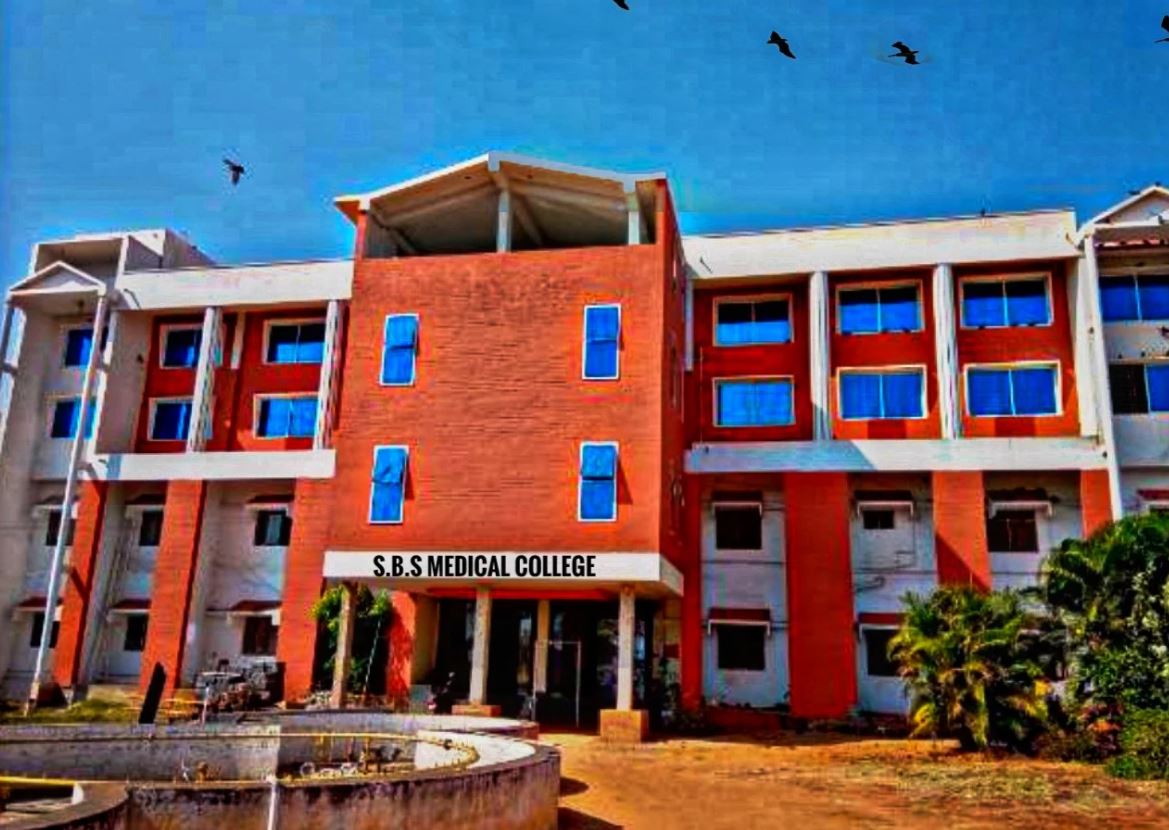
If you are a medical aspirant and searching through the Karnataka’s BAMS landscape for a college that balances classical Ayurvedic training with a well-functioning teaching hospital, Shri SBS Ayurvedic Medical College in Mundargi deserves a serious look.
As an admission consultant who has placed students in Ayurvedic colleges across the state, I have seen this institution evolve from a quiet regional option into a NCISM-recognised, RGUHS-affiliated destination for NEET-qualified BAMS aspirants who want steady clinical exposure without the chaos of a metro campus.
This guide breaks down everything you actually need to know before you lock in a choice: establishment, mission, seat matrix, university affiliation, fee structure, facilities, and the honest reasons this college may or may not suit you.
Shri SBS Ayurvedic Medical College at a Glance
The college was established in 1992 and operates under Shri Siddeshwar Vidyadana Samiti (S.S.V. Samiti), Alwandi. It is located in Mundargi, Gadag district, Karnataka (PIN 582118), on Koppal Road, a setting that keeps the campus calm and study-focused while remaining connected to the district’s referral network.
The institution’s stated mission is to produce graduates with profound scholarship in Ayurveda, combining in-depth knowledge of Ayurvedic fundamentals with extensive practical training so that graduates can serve as competent physicians, surgeons, teachers, and research workers committed to reviving and developing the Indian system of medicine. In plain terms: it is not a degree mill.
The emphasis on clinical bedside training and Panchakarma exposure runs through the curriculum.
Here is the snapshot you need before the deeper dive:
| Parameter | Details |
|---|---|
| Year of establishment | 1992 |
| Location | Koppal Road, Mundargi, Gadag, Karnataka – 582118 |
| Affiliating university | Rajiv Gandhi University of Health Sciences (RGUHS), Bengaluru |
| Regulatory approval | National Commission for Indian System of Medicine (NCISM); earlier CCIM-approved |
| BAMS annual intake | 60 seats |
| Course duration | 5.5 years (4.5 years academic + 1 year internship) |
| Admission gateway | NEET-UG, followed by Karnataka AYUSH-UG counselling (KEA) |
| Teaching hospital beds | 60 beds with Kayachikitsa, Panchakarma, Shalya, Shalakya, and Prasooti Tantra departments |
| Campus size | Approximately 5 acres |
BAMS Seat Matrix and University Affiliation:
The approved BAMS intake at Shri SBS Ayurvedic Medical College is 60 seats annually. That number matters for two reasons. First, a 60-seat cohort keeps the student-to-faculty ratio workable: the college reports 41 faculty members for a total student body of roughly 277, which translates to a learning environment where you are not just a roll number in a 250-student lecture hall.
Second, 60 seats means competition is real but not suffocating, especially if you are targeting management-quota counselling through KEA.
On the affiliation front, the college is affiliated to Rajiv Gandhi University of Health Sciences (RGUHS), Bengaluru, and its programmes are approved by the Ministry of AYUSH under the NCISM framework. The NCISM institution ID AYU0079 appears on the commission’s permitted-college list, and the college has been included for the 2025–26 academic cycle.
For a BAMS aspirant, that affiliation matters because your degree, internship completion, and state registration all flow through RGUHS and the Karnataka Board of Ayurvedic and Unani Systems of Medicine.
A college with a clean, verifiable affiliation chain saves you years of documentation headaches later.
A note on the seat-sharing reality: 60 seats are not all “open.” Seats are distributed across government-quota (KEA state merit), management quota, and NRI quota, and the exact split is published in the KEA seat matrix for the admission year. Do not rely on last year’s matrix.
Pull the current year’s KEA brochure before you build your choice list.
Fee Structure:
Fee transparency is where most Ayurvedic college guides get vague. I will give you the numbers that are publicly reported and then tell you exactly what to verify yourself.
For the 2026–27 cycle, the reported management-quota BAMS package at Shri SBS Ayurvedic Medical College is ₹16,50,000 for the full course, and the NRI-quota package is ₹19,50,000. These are lump-sum course packages, not annual tuition figures, and they exclude hostel, mess, caution deposit, university registration, and examination fees.
The year-wise break-up is more useful for budgeting:
| Year | Management Quota | NRI Quota |
|---|---|---|
| 1st Year | ₹5,50,000 | ₹7,50,000 |
| 2nd Year | ₹3,00,000 | ₹3,00,000 |
| 3rd Year | ₹3,00,000 | ₹3,00,000 |
| 4th Year | ₹3,00,000 | ₹3,00,000 |
| 5th Year (Internship) | ₹2,00,000 | ₹3,00,000 |
| Total package | ₹16,50,000 | ₹19,50,000 |
Hostel and mess are separate, reported at approximately ₹90,000, and that figure sits on top of the package, not inside it. Add roughly ₹15,000–₹25,000 for one-time deposits, university fees, and exam charges in the first year to get a realistic first-year outflow.
Important caveat: Karnataka’s private Ayurveda colleges sell management-quota seats as negotiated lump-sum packages, not a state-fixed annual fee. The ₹16.5 lakh figure is a reported counselling-package rate, not an official KEA fee-fixation notification.
Treat it as a working number, confirm it in writing from the college’s admission office, and cross-check against the KEA fee brochure for your counselling year. The college’s own admissions page states that candidates pay KEA-prescribed fees plus institution fees without publishing the amount, so the written confirmation is non-negotiable.
Facilities and Hospital:
Ayurveda is a bedside discipline. A college without a functioning hospital is a classroom, not a medical school. On this count, Shri SBS Ayurvedic Medical College clears the basic bar and then some.
The teaching hospital carries 60 beds and runs specialised departments in Kayachikitsa, Panchakarma, Shalya Tantra, Shalakya Tantra, and Prasooti Tantra & Stri Roga. The Panchakarma unit and herbal research lab are the two facilities that separate a serious Ayurvedic training from a theory-heavy programme.
Panchakarma is where BAMS graduates either fall in love with clinical Ayurveda or realise they prefer another path, and having a dedicated unit on campus means you are not travelling to a district hospital to observe Vamana or Virechana.
Beyond the hospital, the campus facilities include:
- A well-stocked library with approximately 5,500 books on Ayurveda and allied subjects, plus periodicals and journals.
- Clinical and pathology laboratories equipped for physiological and pathological investigations, including an X-ray unit for imaging exposure.
- A dissection theatre and demonstration rooms, which matter for the Rachana Sharir and Kriya Sharir components of the BAMS syllabus.
- Separate boys’ and girls’ hostels, a cafeteria, a gym, a sports complex, an auditorium, and Wi-Fi campus.
- A herbal garden, which is a small but telling facility for a college that wants students to recognise raw drugs, not just memorise their Sanskrit names.
Student reviews on aggregator platforms consistently rate infrastructure and faculty around 5/5, with recurring comments about strict exam conduct and teachers who provide direct guidance rather than reading from slides.
One reviewer notes the campus feels smaller than some metro colleges, but that the environment and peer group compensate. Take that for what it is: a genuine trade-off, not a dealbreaker.
Why Choose Shri SBS Ayurvedic Medical College?
Here is the honest consultant’s answer, not the brochure version.
You should choose this college if you want a RGUHS-affiliated BAMS degree from a NCISM-permitted institution with a functional 60-bed teaching hospital, a dedicated Panchakarma department, and a fee package that is materially lower than many private Ayurveda colleges in Karnataka’s larger cities for the management quota.
The 60-seat intake means faculty access is realistic, and the college’s stated mission of combining classical Ayurvedic fundamentals with practical clinical training is not just website language; the hospital departments and Panchakarma unit back it up.
You should think twice if you need a large-campus, metro-city experience with a sprawling peer network and a brand name that instantly opens doors in corporate wellness or hospital chains.
Mundargi is a district-town campus, the total student body is around 277, and the infrastructure, while adequate and well-reviewed, is not built to impress visitors with marble atriums.
If your BAMS plan is rooted in clinical practice, Panchakarma specialisation, or a return to your home region as a physician, this college fits that trajectory well. If you are chasing a high-volume research output or international placement pipeline, verify those specifics directly before committing.
The middle path, which is where most serious aspirants land: this is a solid, no-nonsense clinical Ayurveda college at a mid-range fee point, with the affiliation and approval boxes ticked. That is exactly what a BAMS degree needs to be worth something at the end of 5.5 years.
FAQs About Shri SBS Ayurvedic Medical College, Mundargi
1. When was Shri SBS Ayurvedic Medical College established?
The college was established in 1992 under Shri Siddeshwar Vidyadana Samiti, Alwandi, and has operated in Mundargi, Gadag district, since then.
2. Which university is Shri SBS Ayurvedic Medical College affiliated to?
It is affiliated to Rajiv Gandhi University of Health Sciences (RGUHS), Bengaluru, and approved by the National Commission for Indian System of Medicine (NCISM) under the Ministry of AYUSH.
3. How many BAMS seats are available at Shri SBS Ayurvedic Medical College?
The approved annual intake is 60 seats for the BAMS programme.
4. What is the fee for BAMS at Shri SBS Ayurvedic Medical College?
For 2026–27, the reported management-quota package is ₹16,50,000 for the full course, and the NRI-quota package is ₹19,50,000, excluding hostel, mess, and university charges. Confirm the current figure in writing from the college and the KEA brochure before paying.
5. Is NEET required for admission to this college?
Yes. Admission to BAMS at Shri SBS Ayurvedic Medical College is through NEET-UG scores, followed by Karnataka AYUSH-UG counselling conducted by KEA for state-quota seats.
6. Does the college have its own teaching hospital?
Yes. The college runs a 60-bed teaching hospital with departments in Kayachikitsa, Panchakarma, Shalya Tantra, Shalakya Tantra, and Prasooti Tantra & Stri Roga.
7. What facilities are available on campus?
Facilities include a library with around 5,500 books, clinical and pathology labs, an X-ray unit, a dissection theatre, separate hostels for boys and girls, a cafeteria, gym, sports complex, auditorium, Wi-Fi, a herbal garden, and a Panchakarma unit.
8. Is Shri SBS Ayurvedic Medical College recognised by NCISM?
Yes. The college appears on the NCISM permitted-colleges list with institution ID AYU0079 and has been listed for the 2025–26 academic cycle.
9. Is the campus ragging-free and suitable for female students?
The college is co-educational with separate girls’ hostels and on-campus medical facilities. Student reviews describe a disciplined environment with strict exam conduct. As with any college, verify the current anti-ragging committee and hostel warden contacts during your campus visit.