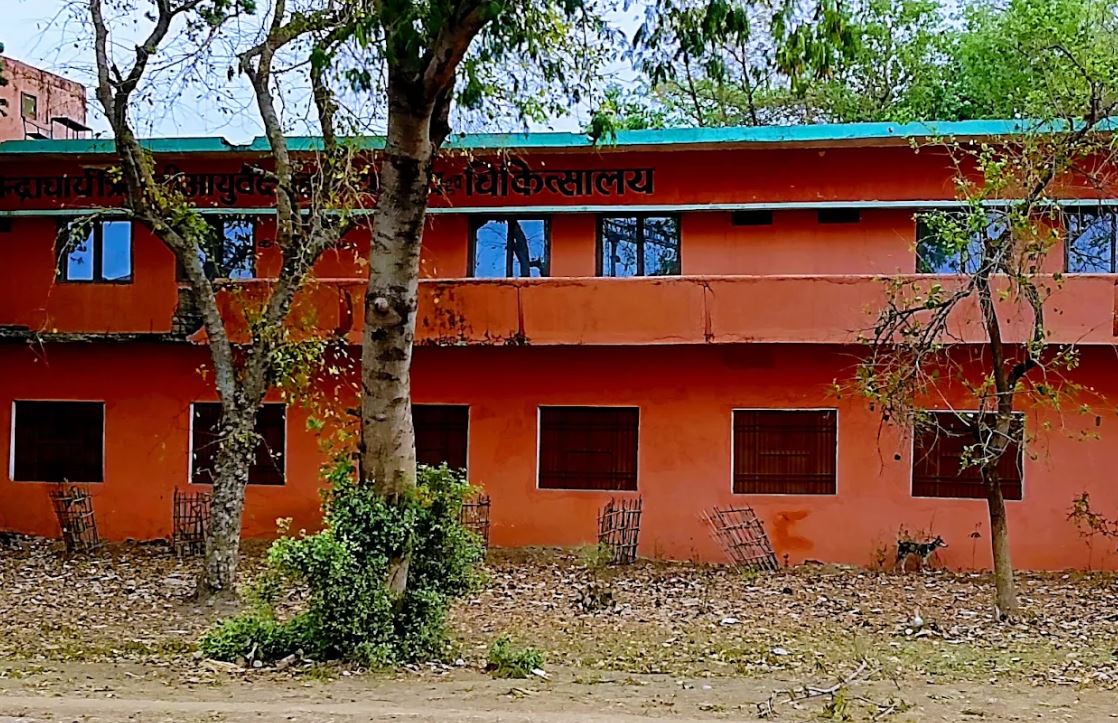
At present moment we can see the growing demand for BAMS courses across India, and aspiring medical students need accurate information about colleges that offer quality education, practical training, and a supportive environment. Swami Raghavendracharya Tridandi Ayurved Mahavidyalaya and Chikitsalaya in Gaya, Bihar, has been serving this purpose since 1978.
This article breaks down everything you need to know about the college, from its establishment history and seat matrix to fees, hostel facilities, and the Ayurvedic garden that supports hands-on learning.
When Was Swami Raghavendracharya Tridandi Ayurved College Established?
Swami Raghavendracharya Tridandi Ayurved Mahavidyalaya was established in 1978 with a clear mission: to make Ayurvedic healthcare accessible to the rural and underprivileged population of Bihar while training competent Ayurvedic physicians.
The college was founded through the efforts of Seth Gangadhar Dalmia, a prominent philanthropist from Gaya, who was inspired by Jagadguru Swami Raghavacharya, the founding secretary of the institution .
The institution was named after the revered ascetic Vaikunthavasi Mahatma Swami Raghavendracharya Tridandi Ji, honoring his contributions to spiritual and social welfare .
Location: The college is situated at Karjara Station, P.O. Manjhouli, Via Wazirganj, Gaya, Bihar – 805131 . The campus is deliberately located outside the city center in a serene, naturally beautiful setting near Karjara railway station, providing an ideal environment for focused medical studies .
BAMS Seat Allotment and University Affiliation
For the current academic year, the college offers BAMS seats under the National Commission for Indian System of Medicine (NCISM) regulations . The seat matrix varies across different sources, which is common as intake capacities get revised periodically.
Here is the available seat information:
| Category | Seats |
|---|---|
| State Quota Seats | 48 |
| All India Quota (AIQ) Seats | 9 |
| Total Seats (as per BCECE UGMAC 2026) | 57 |
Some sources list the total intake as 60 seats, while others mention 125 seats . Prospective students should verify the exact seat count during the Bihar UGMAC AYUSH counselling process for the most current figures.
University Affiliation: The college is affiliated with Baba Saheb Bhimrao Ambedkar Bihar University, Muzaffarpur . This affiliation ensures that the curriculum follows university standards and degrees are recognized nationwide.
Approval: The institution holds approval from the National Council of Indian System of Medicine (NCISM), the apex regulatory body for Ayurvedic education in India .
Admission Route: Admission to the BAMS program is strictly through NEET UG, followed by Bihar UGMAC AYUSH counselling conducted by BCECE .
Why Choose Swami Raghavendracharya Tridandi Ayurved College?
If you are considering a BAMS college in Bihar, this institution offers several compelling advantages. The college combines affordable education with a strong emphasis on practical clinical training, which is critical for building a successful Ayurvedic practice.
The attached 60-bed Ayurvedic hospital provides students with extensive hands-on exposure to real patients under faculty supervision .
The campus is designed for serious learning, featuring a Vanaushadhi Udhaan (Ayurvedic garden) where medicinal plants mentioned in the syllabus are cultivated, allowing students to learn identification and usage directly from nature.
The institution’s long history since 1978 means it has established networks with local communities and healthcare providers, enhancing internship and practice opportunities for graduates.
For students seeking a focused Ayurvedic education in a peaceful, natural environment without the distractions of city life, this college merits serious consideration.
Facilities and Infrastructure
The college campus is equipped with infrastructure that supports both academic learning and clinical skill development.
Academic Infrastructure
The institution maintains departmental museums with model charts and instruments aligned with Central Council of Indian Medicine standards . Laboratories for Physiology, Pathology, and Chemistry are functional with modern equipment and chemicals.
The college has its own library with a collection of books on Ayurveda and allied subjects by various scholars .
Clinical Training Facilities
The attached hospital has outdoor and indoor patient departments, providing students with direct clinical practice opportunities. A mortuary facility is available for practical anatomy and forensic training . The pathology laboratory offers free testing services for patients, giving students exposure to diagnostic procedures.
Ayurvedic Garden (Vanaushadhi Udhaan)
One of the distinguishing features of this college is its herbal garden, where medicinal plants are systematically cultivated according to the BAMS curriculum . This living laboratory helps students learn plant identification, cultivation, and therapeutic properties firsthand, a crucial skill for any Ayurvedic practitioner.
BAMS Course Details and Fee Structure
The BAMS program at this institution follows the standard format of 5.5 years, comprising 4.5 years of academic study and 1 year of compulsory clinical internship.
Eligibility Criteria
| Requirement | Details |
|---|---|
| Qualifying Exam | 10+2 with Physics, Chemistry, Biology, and English |
| Entrance Exam | NEET UG qualification |
| Minimum Age | 17 years by December 31 of admission year |
Fee Structure
Fee information varies across sources, reflecting different academic years and possibly different components included:
| Component | Amount |
|---|---|
| Total academic fee (one source) | INR 25,30,000 |
| Management fee (per year, another source) | INR 2,16,000 |
The discrepancy highlights the importance of verifying current fees directly with the college administration. Hostel fees are generally charged separately from academic tuition.
Hostel and Campus Life
The college provides separate hostel facilities for male and female students with basic amenities . Hostel accommodation includes access to a canteen for meals, and the campus environment supports a community of students pursuing Ayurvedic education together .
Some sources list hostel fees at approximately INR 80,000 per year, though this figure should be confirmed with the institution . Living on campus offers advantages such as proximity to classes, hospital training, and the herbal garden, making it easier to immerse yourself in the study of Ayurveda.
Frequently Asked Questions (FAQs)
1. When was Swami Raghavendracharya Tridandi Ayurved College established?
Swami Raghavendracharya Tridandi Ayurved College was established in 1978 and has been operating for more than four decades.
2. Which university is Swami Raghavendracharya Tridandi Ayurved College affiliated with?
The college is affiliated with Baba Saheb Bhimrao Ambedkar Bihar University, Muzaffarpur.
3. How many BAMS seats are available at this college?
Reported seat distribution indicates 48 state quota seats and 9 All India Quota (AIQ) seats, totaling 57 seats. However, published figures may vary, so candidates should confirm the current permitted intake and seat matrix during counselling.
4. What is the admission process for BAMS at this college?
Candidates must qualify in NEET-UG and participate in the applicable Bihar UGMAC AYUSH counselling process conducted by the Bihar Combined Entrance Competitive Examination Board (BCECEB). Admission depends on eligibility, merit, seat availability, and the current counselling rules.
5. Does the college have a hostel facility?
The college has been reported to provide separate hostel facilities for boys and girls, with basic amenities including a canteen. Students should contact the college to confirm current availability, facilities, and hostel charges.
6. Is there an Ayurvedic garden on campus?
Yes, the college has been reported to maintain a Vanaushadhi Udyaan, or Ayurvedic herbal garden, where medicinal plants are cultivated to support practical learning in the BAMS curriculum.
7. What clinical facilities are available for students?
Reported clinical training facilities include an attached 60-bed Ayurvedic hospital, outpatient and inpatient departments, a pathology laboratory, and a mortuary. Students should verify the current facilities and clinical training arrangements with the college.
8. What is the fee structure for BAMS at this college?
Published fee figures vary by source and academic year. One reported estimate lists total academic fees of approximately ₹25,30,000, while another lists management fees of around ₹2,16,000 per year. Candidates should obtain the current, quota-wise fee structure directly from the college or the relevant counselling authority before admission.
9. Where is the college located exactly?
Swami Raghavendracharya Tridandi Ayurved College is located at Karjara Station, P.O. Manjhouli, Via Wazirganj, Gaya, Bihar – 805131, near Karjara railway station.